 Machu Picchu Private Tours
Overnight in Aguas Calientes
An Aguas Calientes overnight (Machu Picchu Pueblo, the car-free town below the citadel) converts directly into earlier gates and calmer mornings. The full comparison holds the tours that meet you there.
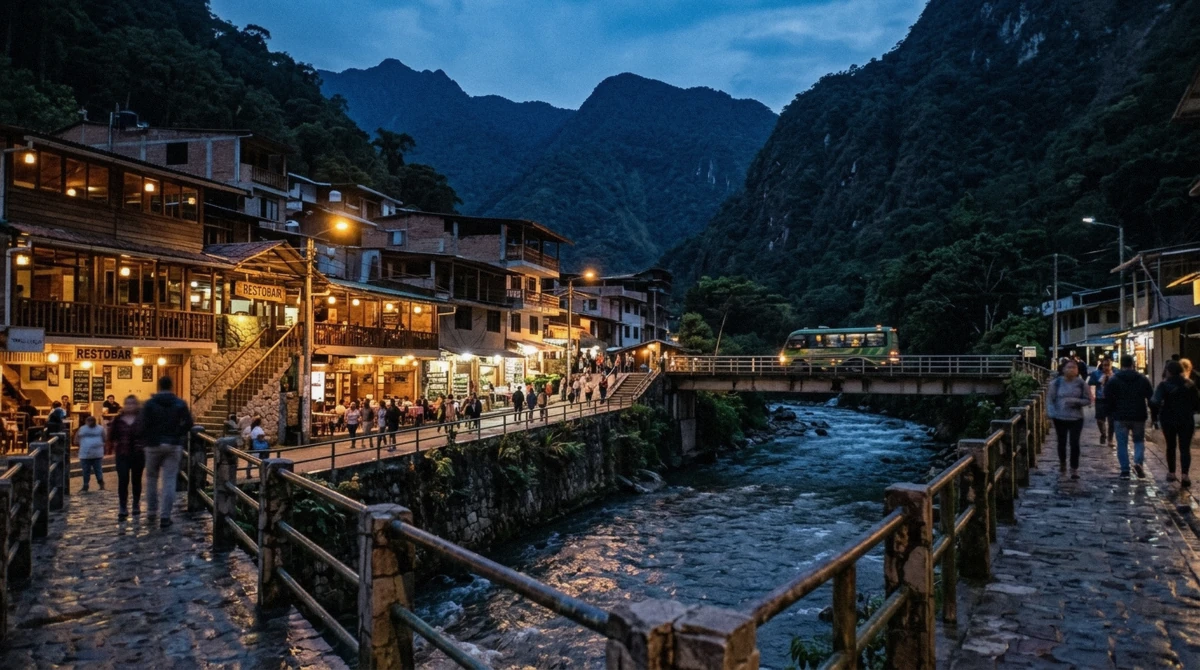
Aguas Calientes from the river bridge at dusk: bus-free streets, plaza restaurants and the ridge the citadel sits on - the town that exists to feed the gate above it.
Quick answer What the town is, and the two mornings it unlocks
Aguas Calientes - officially Machupicchu Pueblo - is the rail terminus in the gorge below the citadel, about 2,040 m up, car-free, and built for exactly one industry: feeding and bedding the people on their way through the gate. Sleeping here overnight buys two mornings nothing else can: the 06:00 first entry (the dawn slot, before the day-train crowds) and the in-person ticket queue at the Cultural Centre when online stock is gone - the mechanism the last-minute listing is built around. It also turns a 15-hour Cusco day into two civilised ones.
Key takeaways
- First-entry logistics and the mist lottery: the sunrise guide
- Hotels cluster by budget tier; the private listings that meet in town work from any of them
- Comparing bases? The Sacred Valley start is the other strategic overnight
- Hotels are a ten-minute walk from everything - the comfort 3-star tier suits most first visits
Why Sleep Down Here
The overnight is not sentimental - it is logistics, and it converts directly into earlier gates and cheaper tickets.
The two strategic mornings
First: the dawn entry. Buses start around 05:30, the gate admits the first window at 06:00, and the hour that follows is the emptiest the citadel ever gets - reachable only from a bed in this town. Second: the sold-out rescue.
Peru releases roughly 1,000 same-week tickets at the Cultural Centre counter each day, first-come from early morning; travellers who slept here queue rested at 07:00 instead of sprinting off the 07:45 train. Both mechanisms are covered in the first-entry guide and the last-minute listing's page.
The decompression argument
The from-Cusco day trips work - they just work at 03:00-05:00 pickups and hotel returns near dark. Splitting the journey halves each day: travel in the afternoon, visit in the morning, and let the town's plaza restaurants handle the evening. Families, dawn-chasers and anyone pairing the citadel with Huayna Picchu tend to conclude the extra night is the cheapest luxury in the itinerary.
The Town Itself
Aguas Calientes is a single riverside main street, a plaza, and steep green walls on every side - with a handful of facts worth knowing before you book a bed.
What it is like on the ground
No cars - the streets are pedestrian and the luggage moves on trolleys. Restaurants ring the plaza and climb the side streets, from menu-carrying tourist spots to genuine cevicherias; the hot springs that named the town sit at the upper edge, a ten-minute walk and a ticket worth having after the citadel. Hotels stack every tier from dorm beds to a luxury property by the river; most travellers book two to three star rooms a few minutes' walk from the bus stop.
At 2,040 m the nights are warm by Andean standards - warmer than Cusco by a comfortable margin.
The quirks
Everything arrives by rail, so prices run above Cusco's. Mosquitos are real at dusk - repellent is not optional. And the town's schedule follows the trains: it wakes before dawn with the first departures and goes quiet by ten at night, which suits exactly the people who chose it.
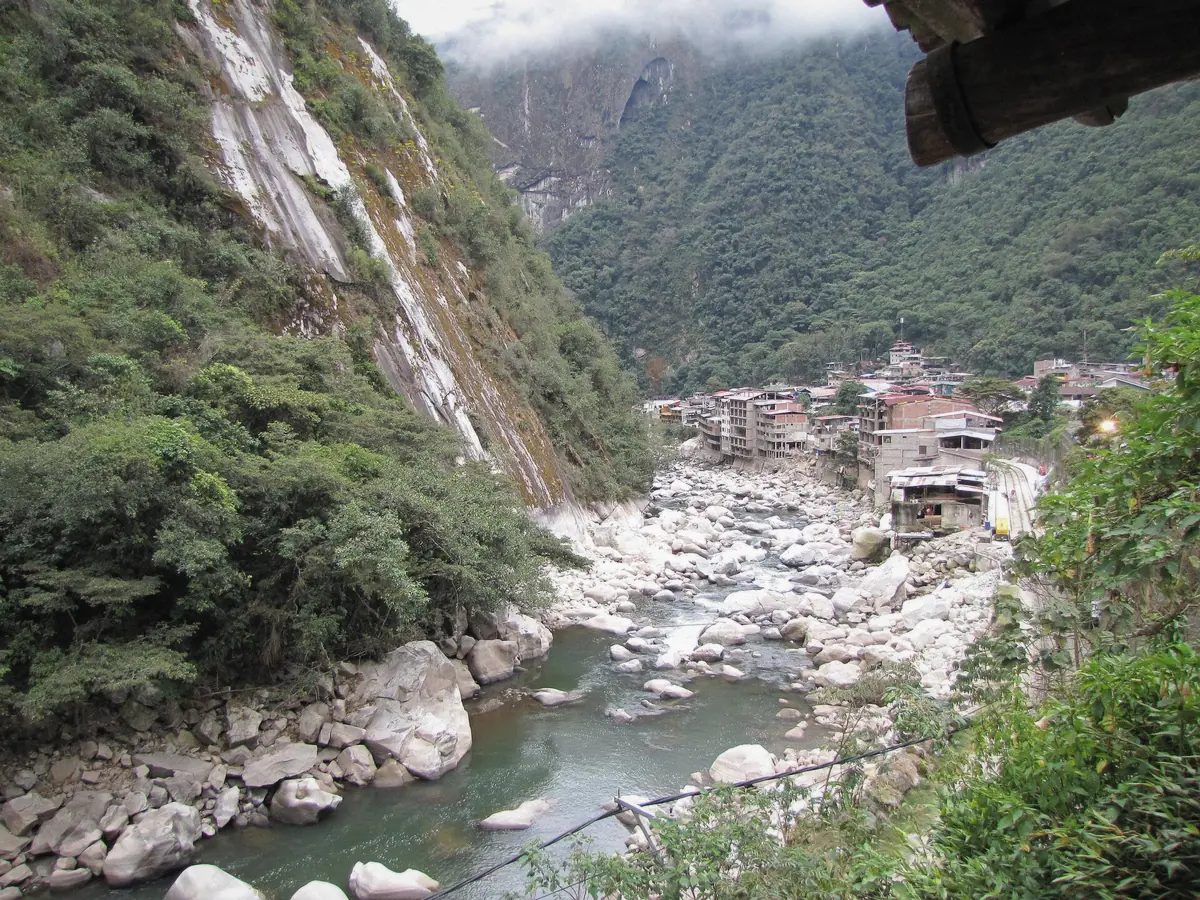
The river sets the town's sound and its layout: everything happens along this water. Photo: David Berkowitz / CC BY 2.0, via Wikimedia Commons
The Two-Day Plan
How an overnight structures the visit differently - arrival, evening, and the dawn.
Arrival, evening, morning
Take the afternoon train from Ollantaytambo after a morning in the valley; check in, walk the river, eat early, sleep at Andean hours. Morning is the payoff: the 05:30 bus with the dawn crowd or the 07:00 Cultural Centre queue, then the citadel while the light is still working. Return trains run through the afternoon - the private listings that meet in town slot into either day shape, and the Cusco door-to-door days exist for travellers who would rather compress it all into one long one.
Eating Well in Town: What the Restaurants Actually Are
Aguas Calientes feeds more travellers per square metre than any town in Peru, and the restaurant scene is better than its transit-town reputation. The plaza ring holds the full spectrum: set-menu turistico lunches (fast, fine, forgettable), sit-down Peruvian kitchens doing genuine ceviche and lomo saltado, wood-oven pizza for the children who have earned it, and coffee good enough to surprise travellers who expected train-station brews. Prices run a tier above Cusco - everything arrived by rail - and the practical play is the one locals use: walk one street off the plaza for the same food at noticeably kinder prices.
Travellers on the with-lunch listing eat on the operator's table; everyone else books nothing, walks, and reads the menu boards - the town's restaurants post them all.
A quick orientation
Not a directory - the town's turnover is too fast for one - but the geography of eating well.
| Where | What it is | The play |
|---|---|---|
| Plaza ring | Tourist menus, highest prices, fastest service | Convenient before the dawn; fine, not memorable |
| Side streets off the plaza | Local kitchens, kinder prices, slower evenings | Walk one block - this is where dinner improves |
| River strip | Grilled-trout specialists and traveller bars | The post-citadel celebration zone |
| Market stalls by the station | Snacks, fruit, coffee for the morning queue | Stock the daypack at dawn prices |
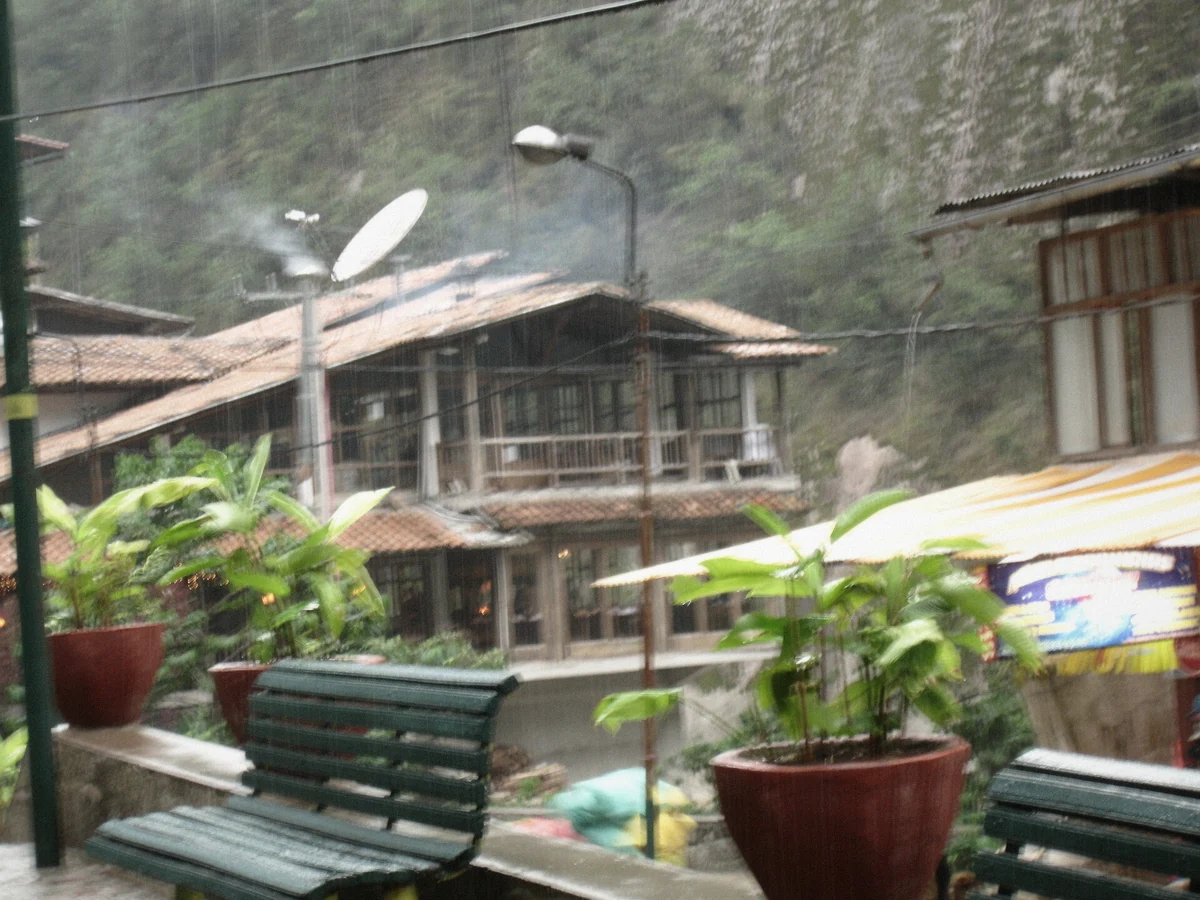
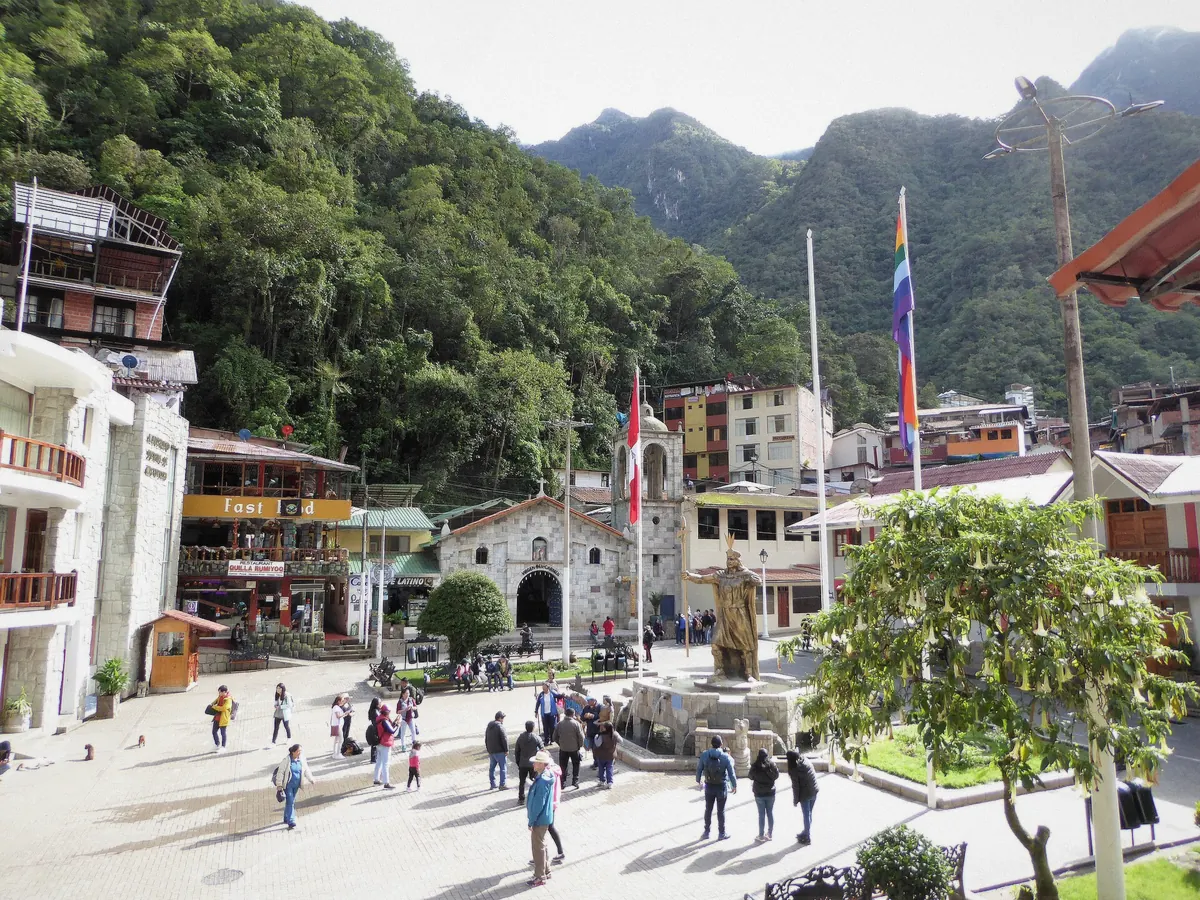
Pachacutec keeps the main square: the plaza is the town's dining room and its landmark in one. Photo: Jorge Láscar from Australia / CC BY 2.0, via Wikimedia Commons_(4548794420).jpg)
Money, ATMs and the Evening's Practicalities
The town banks on tourists and still runs on cash: ATMs cluster near the plaza (with fees that sting, and occasional dry spells in high season), cards work at the larger restaurants and hotels, and the market stalls, porters and tips want small soles notes. The practical sequence for an overnight: withdraw in Cusco before boarding, carry small notes for the dawn queue economy, and treat the town's premium - everything arrived by rail - as part of the visit's price rather than an insult. Wet evenings have their own shape: the hot springs run later than the restaurants, rain gear earns its place in the daypack one last time, and the morning's queue is kinder to travellers who let the evening end when the town's does.
A One-Night Budget for the Town
The overnight's cost is small against the trip, but worth seeing whole: a comfort-tier room, dinner with a beer, the hot springs, next morning's coffee and bus snacks. The table prices a realistic one-night stay at 2026 levels - ranges, not quotes, because everything in town moves with season.
Where the soles go
Cash from Cusco, cards at the bigger tables, and the dawn economy in small notes.
| Line | Typical range | Note |
|---|---|---|
| Room, comfort 3-star | US$70-140 | Breakfast included; riverside rooms carry train noise |
| Dinner with drinks | US$12-25 a head | Plaza ring prices; side streets kinder |
| Hot springs entry | A few soles | Evening hours suit the post-train arrival |
| Morning coffee + snacks | US$5-10 | Market stalls for the daypack |
| Bus tickets (if not bundled) | US$24 return | Buy online the night before |
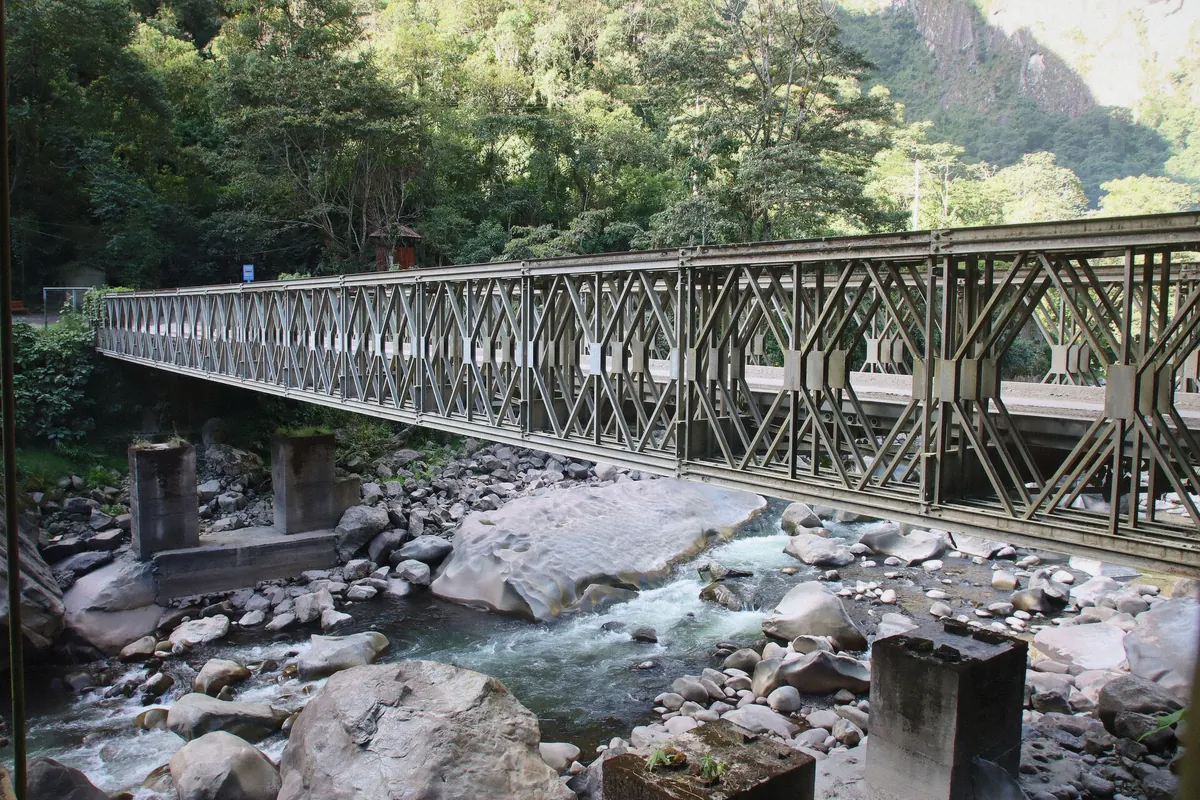
The streets climb steeply from the river - pack light for the walk from station to bed. Photo: Rodrigo.Argenton / CC BY-SA 3.0, via Wikimedia Commons.JPG)
Common Mistakes, and the Fix for Each
The same errors recur across traveller reports and operator notes - each is avoidable at planning speed, which is why they earn a list rather than a footnote.
Avoid these eight
- Booking the town for the wrong night - the overnight must sit the evening BEFORE the entry slot, and travellers who arrive the morning of their window have booked Cusco logistics by mistake
- Carrying large luggage through town - the streets are pedestrian and narrow; leave big bags at the Cusco hotel and bring the daypack
- Skipping dinner for an early bed - the 05:00 wake-up on an empty stomach is the dawn visit's most common self-inflicted wound
- Forgetting cash - ATMs run dry in high season and the dawn economy (bus snacks, tips, toilets) runs on small soles notes
- Ignoring the mosquito hour - dusk along the river is peak biting time; repellent before dinner, not after the first bite
- Buying bus tickets for dawn at a dawn premium - the official online price is the same, bought at 21:00 or 05:00
- Planning a second citadel circuit on the same ticket - re-entry is barred; a second day means a second ticket booked in advance
- Leaving without looking up - the town sits under the citadel's ridge; the fifteen-minute stair viewpoint above the roofs is free and most travellers never take it
- Showering after the hot springs before bed - the mineral water dries skin overnight and the 05:00 alarm feels better for it
- Setting two alarms in different devices - the dawn queue forgives nothing, and phone batteries die in cold rooms
- Confirming the return train seat the evening before - the ticket exists, but the platform assignment occasionally moves
- Eating breakfast at opening rather than the room - the hotel spreads start before the buses and the queue waits for no croissant
Frequently Asked Questions
Should I stay overnight in Aguas Calientes before Machu Picchu?
If you want the 06:00 first entry, the in-person ticket queue, or simply a human-paced visit instead of a 15-hour Cusco day - yes. One night covers it; two buy a second dawn attempt if photography matters.
What is Aguas Calientes (Machupicchu Pueblo) like?
A car-free, single-street town at 2,040 m built around the rail station: plaza restaurants, hot springs at the upper edge, hotels in every price band, and a schedule that follows the trains. It exists to serve the citadel and is honest about it.
Where should I stay - Aguas Calientes or the Sacred Valley?
Aguas Calientes for dawn entries and ticket-queue flexibility; the Sacred Valley for acclimatization, scenery and hotels, using the valley-start day tour to reach the train in minutes. Both beat a same-day Cusco round trip; many itineraries use each for a night.
How early do the buses leave Aguas Calientes for Machu Picchu?
The Consettur line starts around 05:30, queueing from earlier in peak season, and runs the 30-minute switchback route continuously through the morning. The stone stair is the only alternative - roughly 90 minutes of climbing you may want for the return instead.
Is Aguas Calientes worth visiting in itself?
As a destination, modestly - the hot springs, the river market and the plaza restaurants fill an evening pleasantly. As a base, it is the most strategic bed in Peru: it converts directly into earlier gates, better tickets and calmer mornings.
Where to Sleep: The Three Tiers
Aguas Calientes hotels cluster into three honest tiers, all within a ten-minute walk of the bus stop - the town is that small. Prices swing with season and demand, so treat the ranges as shape rather than quote; every listing in the comparison catalog works from any of them, because guides meet you at your door or the station.
The tiers, and who each fits
Book early for dry-season dates: the town's bed stock is finite and the cheapest tiers sell out weeks ahead in June through August. Breakfast is almost always included; riverside rooms trade a view for train noise, so light sleepers should ask for a courtyard-side room when booking.
| Tier | Typical nightly range | What you get | Who it fits |
|---|---|---|---|
| Hostal / guesthouse | US$25-60 | Clean private room, hot water, thin walls | Budget travellers and the last-minute queue crowd |
| Comfort 3-star | US$70-140 | Breakfast, storage, heating, plaza or river location | Most overnight visitors on a first Machu Picchu trip |
| Riverside premium | US$250-450+ | Restaurant, spa touches, bigger rooms by the water | Celebration trips and the second-night photographers |
The town from above: one street deep, walled by cloud forest, everything arrived by rail. Photo: Draceane / CC BY-SA 4.0, via Wikimedia Commons,_2023_(02).jpg)
An Evening in Town, Ordered
The evening before a citadel visit has a natural order: tickets confirmed, kit laid out, an early dinner, and the hot springs if your legs want them. The private listings that meet you in town reconfirm the morning's meeting point by message the night before, which is the last logistics you should have to think about.
The sensible sequence
Check in and drop bags - luggage storage at the hotel frees you for the evening. Confirm tomorrow's entry slot and meeting point on whatever channel your operator uses. Walk the plaza, eat early (kitchens wind down by nine), pay your bus tip money in small soles, and set two alarms.
The hot springs close in the evening; an hour in warm water before a 05:00 wake-up suits most legs better than a second round of town.
Mistakes worth not making
Four recur: booking a hotel 'in Cusco' for a first-entry slot that needs you in town; leaving passport scans to the morning of the visit when the operator asked for them at booking; planning a big night - the town sleeps early and so should you; and forgetting cash, since the smaller eateries and the market stalls still prefer it. Travellers on the last-minute ticket route have one more: buying bus tickets the night before to skip the dawn ticket line.
Trains In and Out: The Timings That Shape the Night
An overnight is only as good as its trains. Arrivals cluster in two waves - early afternoon for overnights, mid-morning for same-day visitors - and the difference between them is the difference between a calm evening and a rushed one. Departure planning matters just as much, because the last trains leave before dark and the town has nowhere to sleep you if you miss one.
The arrival wave
Overnight travellers should target the early-afternoon arrivals: they land you in town with daylight for the river walk, a relaxed check-in, and a hot-springs hour before dinner. The mid-morning wave belongs to the same-day crowd, and town visibly changes character when it arrives - queue noise, bag trolleys, restaurant pushes. Travellers assembling the journey independently should note that afternoon seats also price softer than the morning peaks on most dates, and the private listings that meet you in town coordinate around whichever train you hold.
The departure question
Next-morning visitors leave after the citadel - the trains run through the afternoon, and the sensible slot is the one that follows a shower-free descent rather than the first available carriage. Same-day travellers racing back to Cusco flights should leave two trains of margin, because the road leg from Ollantaytambo still has traffic to lose to. And for the last-minute ticket crowd, the first-morning departure is the one that matters: it has to land early enough for the Cultural Centre queue, which is exactly the constraint their booking form asks about.
Evening on the restaurant strip - the decompression half of the overnight's argument. Photo: Arabsalam / CC BY-SA 4.0, via Wikimedia Commons
Town Practicalities Worth Knowing
Aguas Calientes is small enough to learn in an evening, but four practical facts change how comfortably that evening goes. None of them appear in brochure copy; all of them recur in traveller post-mortems.
The four practicals
First, altitude: at about 2,040 m the town sits a full kilometre lower than Cusco, and travellers who felt rough in Cusco usually sleep and breathe noticeably better here - one more argument for the overnight format. Second, mosquitos are real at dusk along the river; repellent is not a souvenir-shop upsell but functioning planning. Third, cash still rules the smaller end of town - market stalls, the odd toilet attendent, porters and tips - so carry small soles notes rather than relying on cards.
Fourth, the town's noise follows the river and the trains, not cars: light sleepers pick courtyard rooms away from the tracks, and every guide meeting in town happens at your hotel precisely because everything is walkable. Beyond these four, the practicals shrink to geography: the bus stop, the plaza and the station are all within ten minutes of any bed in town, which is why the last-minute ticket crowd can sleep late-ish and still queue early.
Town or Valley: Choosing the Overnight Base
Travellers with two spare nights often ask whether to spend them both below the citadel. The stronger pattern alternates: the Sacred Valley for acclimatization, scenery and hotels, then Aguas Calientes for the dawn - and each base has a listing family built around it.
How the split works
The valley nights buy acclimatization at gentler altitudes, the classic hotels, and mornings that reach the Ollantaytambo railhead in minutes - the logic behind the valley-start day listing. The town night buys the 06:00 gate and the in-person queue. A three-night shape runs valley, valley, town: two days of acclimatized seeing, then the dawn without a pre-alarm road leg.
Travellers with only one night for everything should spend it in town - the first-entry advantage outweighs any valley hotel's charm - and travellers who cannot face packing twice should price the door-to-door Cusco days instead, which trade the overnight for a 03:00 alarm. Every shape ends at the same turnstile; the differences are how you feel walking to it. The one-night town earns its place in more itineraries than any other single decision on this site: it converts the citadel from a sprint into a day, it feeds the dawn strategy, and it costs a hotel night.
Travellers who sleep in Cusco and ride the 03:00 chain see exactly the same stones - the overnight changes the traveller, not the ruins, and that is precisely why the operators who meet you in town can charge for their calm.