 Machu Picchu Private Tours
What a Private Machu Picchu Tour Should Cost
How much does a Machu Picchu private tour cost? The honest answer is four official components plus operator margin - priced here against the live comparison so every quote can be checked.
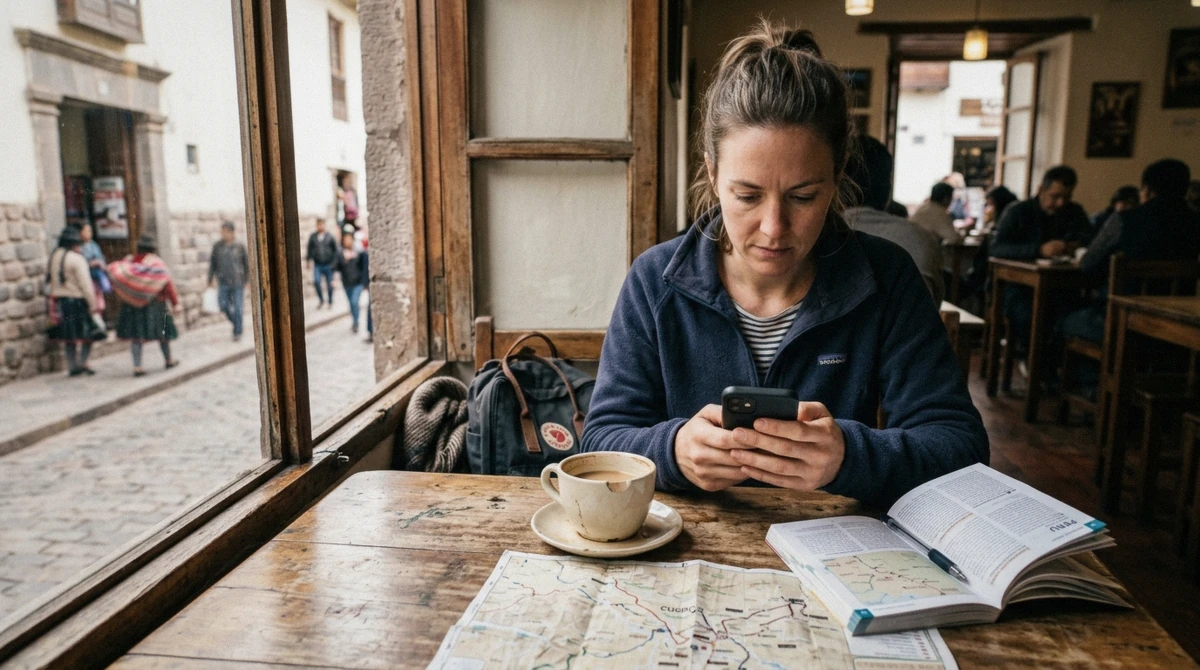
Cafes off Cusco's Plaza de Armas are where most Machu Picchu itineraries are actually assembled: phone, guidebook, and a price table like the one above this photo.
Quick answer The four official cost parts, and what fair bundle pricing looks like
A private Machu Picchu tour price is four official components plus margin: entry S/152 + S/11 conservation fee (about US$44-49), bus US$24 round trip, train from about US$70 round trip, and a private guide at US$80-120 per group. Fair 2026 rates: a guide-only booking $98 a group; a private entry-plus-bus visit $170-199 a head; a door-to-door Cusco day $359-590. Anything far under those bands is usually missing a component - most often the entry ticket.
Key takeaways
- Do the maths yourself: the live listings are priced against these components in one table
- The $98 guide-only service is the pure guide cost with nothing bundled
- Train fares swing the total most - see getting there for the rail options and classes
- The per-group vs per-person maths, tabulated: see cost by group size
The Four Official Cost Components
Every listing on this site bundles some mix of the same four parts. Priced separately at 2026 official rates, they look like this - and they explain the gaps between a $98 service and a $590 day.
Entry, bus, train, guide
The Ministry of Culture's entry ticket rose by an S/11 conservation surcharge on 1 May 2026, taking the foreign adult fare to S/163 (about US$44-49) - official sales run through tuboleto.cultura.pe. The Consettur bus costs US$12 one-way, US$24 round trip (official sales). The train leg depends on class: Expedition/Explorer class from about US$70 round trip, Vistadome and 360-degree carriages in the middle, the Hiram Bingham above US$300.
And a private certified guide for a 2-2.5 hour circuit visit runs US$80-120 per group - our guide-only listing prices it at $98 for up to eight people.
| Component | 2026 official rate | Bought via |
|---|---|---|
| Machu Picchu entry (foreign adult) | S/152 + S/11 fee = S/163 (~US$44-49) | tuboleto.cultura.pe |
| Consettur bus, both directions | US$24 (US$12 each way) | comprar.consettur.com |
| Train, Ollantaytambo-AC return | ~US$70 Expedition to US$300+ premium | PeruRail / Inca Rail |
| Private guide, 2-2.5 hours | US$80-120 per group | Licensed operators - e.g. the $98 listing |
Where tour prices actually go
A $199 private visit from Aguas Calientes spends roughly a quarter of its face value on the ticket and bus alone; the rest buys the guide's day, the WhatsApp coordination that secures scarce circuits, and the operator's margin. A $590 Cusco day with lunch must also cover a private car for four road hours and two rail seats. When a quote comes in below the component maths, the missing line is almost always the entry ticket or the guide's certification - ask which circuit, which train class, and whether the S/163 ticket is included, and a vague answer ends the conversation.
The Live Listings, Priced
Against those components, the comparison table sorts into three honest bands - and the price differences inside each band are explained by inclusions, not mystery.
Band 1: Aguas Calientes base, $98-209 per person (or group)
The guide-only service at $98 a group is the floor; the entry+guide small group at $170; the two fully private $199 listings (our pick and the circuit-choice tour); and the last-minute ticket service at $209, which adds queue labour to the same package. Every one assumes you sleep in Aguas Calientes.
Band 2: door-to-door from Cusco, $359-390
The all-included day ($359) and the bimodal day ($390) wrap car, train, buses, entry and guide. Their band is set by the train: two return rail seats plus a private car is already ~$200+ of official cost per couple before anyone guides anything.
Band 3: the premium day, $410-590
The valley-start day ($410) prices the shorter transfer and free cancellation; the with-lunch day ($590) prices the meal and the complete removal of decisions. Premium here buys logistics, not better ruins - the citadel is identical at every price.
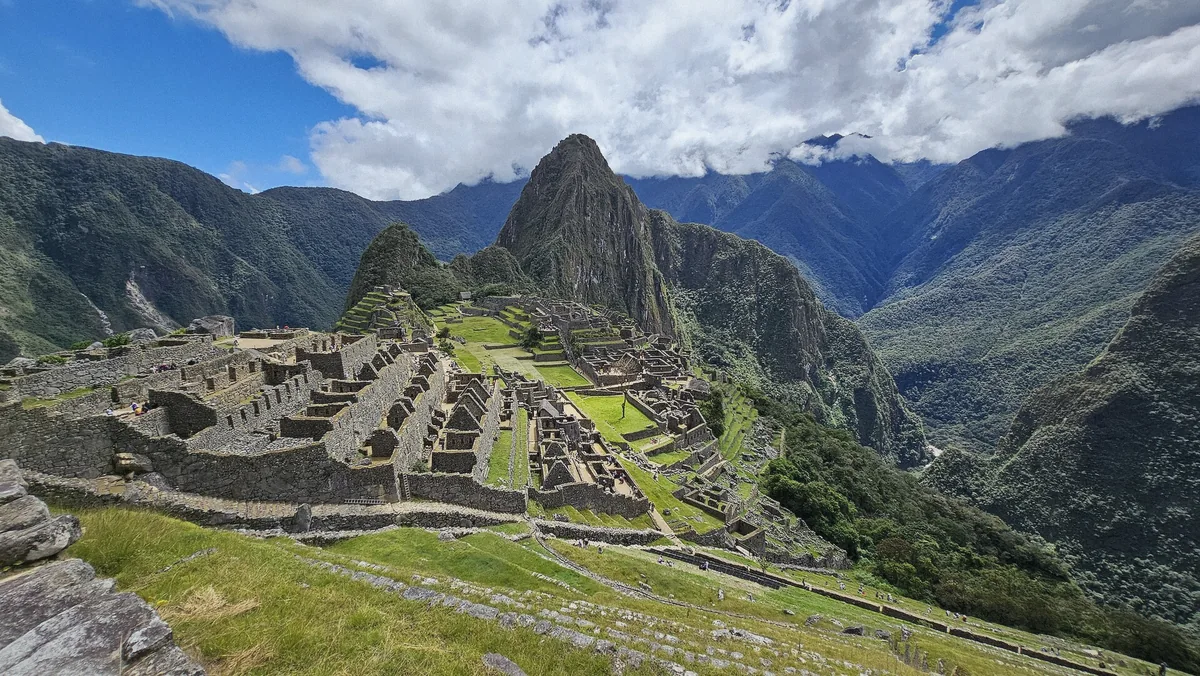
The panorama your entry window buys: every listing on this site prices access to this one view. Photo: Jorge Castro Ruso / CC BY-SA 2.0, via Wikimedia Commons
Is Machu Picchu Really Worth the Money?
The honest case runs through the numbers on this page: a family of four spends roughly $450-900 to see the citadel well, depending on format - real money against a Peru budget. What the price buys is access to the most intact large-scale Inca site, at a managed intimacy (rationed entries, timed circuits) that almost no world landmark of its rank still offers. Travellers who have stood on the terraces overwhelmingly rate the day worth it; the disappointed minority is concentrated in trips that met the site unprepared - sold-out circuits, no guide, the 2.5-hour window frittered at the entrance queue.
The money is worth it when the visit is planned; the same money is wasted when it is not. That is the entire argument for booking the circuit deliberately before anything else.
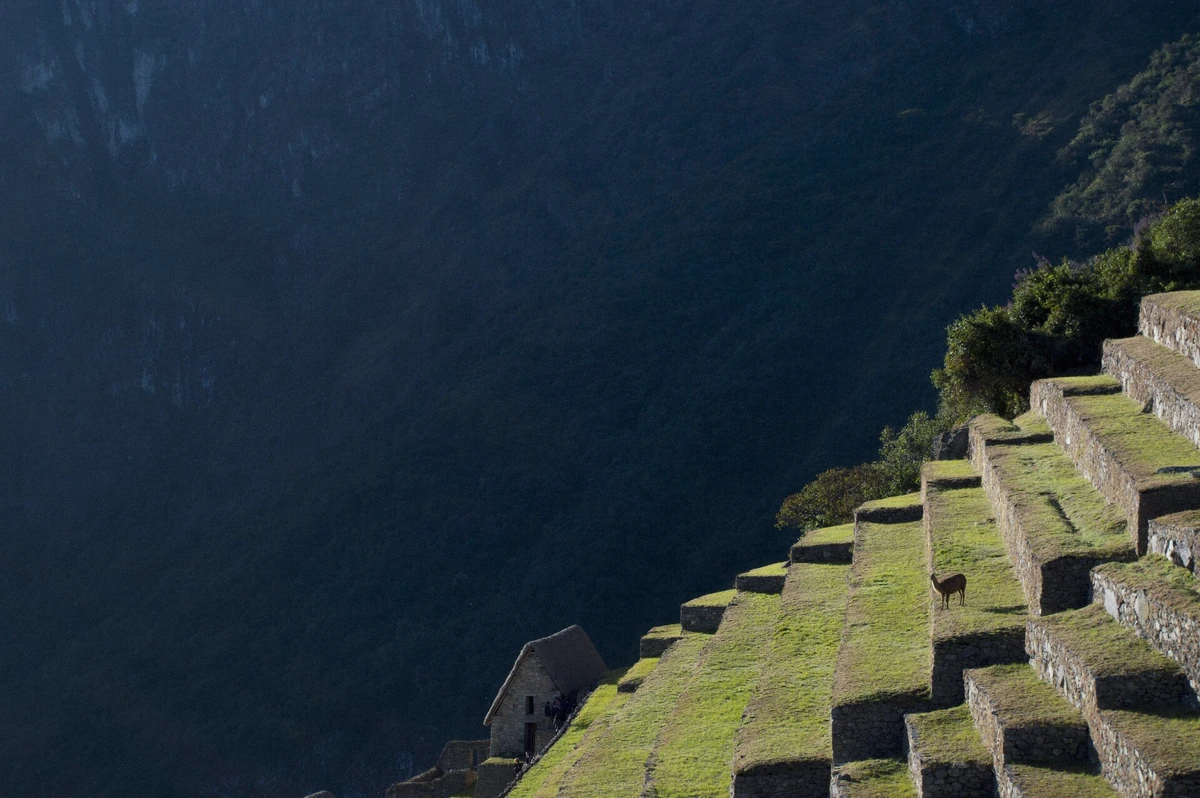
The terraces' most photographed workers work for free - llamas graze the grass that would otherwise obscure the stones. Photo: Antón Jáuregui antonjau / CC0, via Wikimedia Commons.jpg)
Package Deals and the Costco Question
Bundle packages - warehouse-club deals, multi-site Peru passes, flight-plus-tour bundles - price opacity in bulk. Evaluate them with the same component maths as any quote: unpack what the package actually includes (entry ticket? which circuit? train class? guided or not?), price those parts against the official table above, and the deal grades itself. Two honest observations from reading packages during this comparison: they rarely beat the best bookable listing here on price for a single-site trip, and they earn their keep on multi-city itineraries where their logistics span Cusco, the valley and the citadel in one contract.
Safety context, since travellers ask alongside cost
The Cusco-Machu Picchu corridor is Peru's most policed tourist route, and visits run year-round without incident for the overwhelming majority; the realistic risks are petty theft in Cusco and, rarely, road or rail disruption from national protest action - the reason a flexible day belongs in deep wet-season itineraries. Travellers wanting a current official assessment should check their own government's travel advisory before booking; this site prices tours, not geopolitics.
Two Worked Budgets, Line by Line
Abstract component tables persuade nobody; arithmetic persuades everybody. Below are the two budgets this page is asked for most, priced at the official 2026 rates and the live listings - a couple with mid-range tastes, and a family of four doing the same trip smartly.
The couple and the family, priced
Both assume a dawn entry, a guided visit, and one night in town; the family runs the guide-only route because the arithmetic collapses in its favour. Both budgets make the same closing point from opposite directions: the components are fixed, the margin is the variable, and the traveller controls only one thing - which margin is worth paying. A couple buying the cheapest guided entry and a family running the flat-rate guide made the same smart move: they named the margin they accepted before any operator named it for them.
That habit, more than any single booking, is what this page is for.
| Line | Couple | Family of 4 |
|---|---|---|
| Entry tickets (S/163 each) | ~US$98 | ~US$196 |
| Consettur bus, return | US$48 | US$96 |
| Train return (Expedition) | ~US$150 | ~US$300 |
| Guide (private, 2.5h) | $98 (group rate) | $98 (group rate) |
| Hotel night in town | US$90 | US$120 (family room) |
| Meals | US$40 | US$70 |
| Total | ~US$525 | ~US$880 |
| Versus four per-person private seats | -$127 | -$300+ more saved |
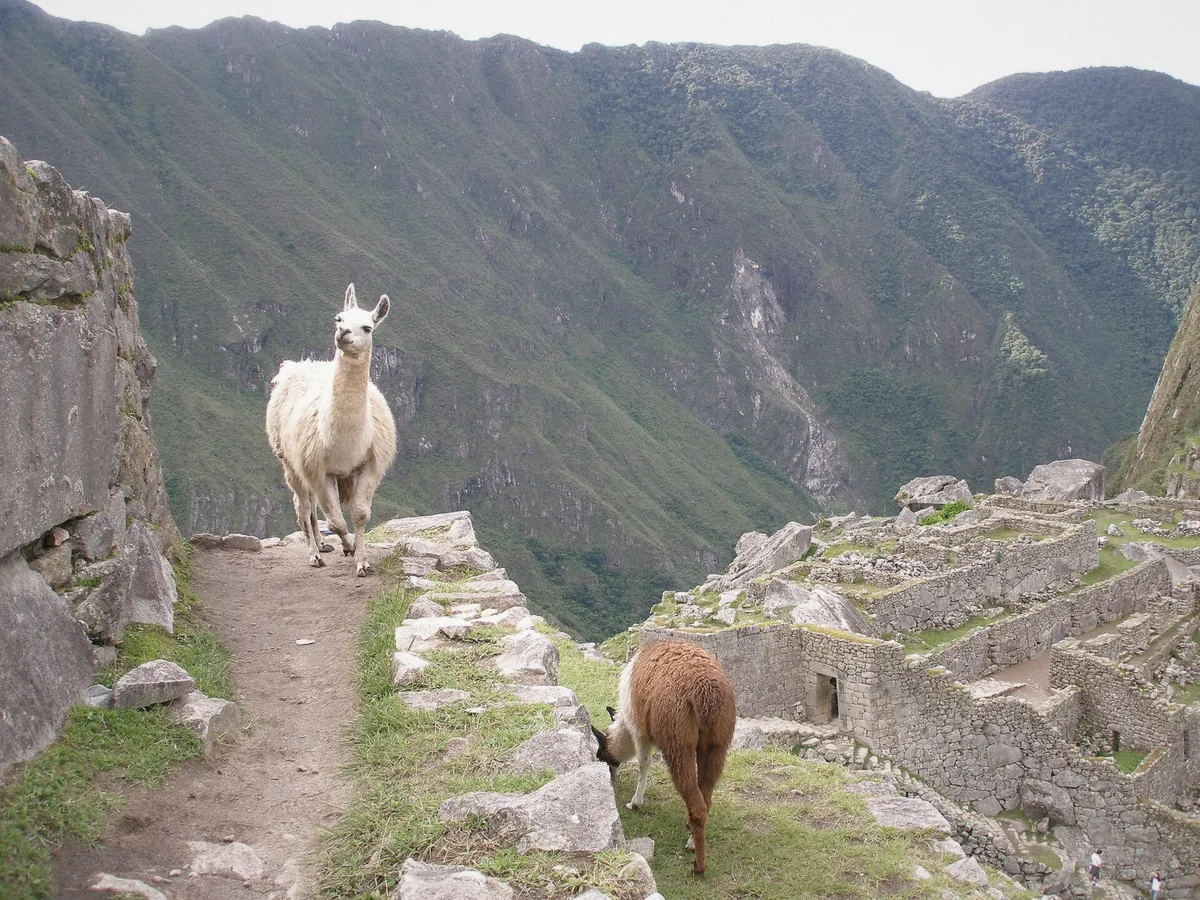
Wildlife is part of the ticket: the llama herd is resident, and mid-morning is when it climbs to the upper terraces. Photo: quinet / CC BY 2.0, via Wikimedia Commons
Common Mistakes, and the Fix for Each
The same errors recur across traveller reports and operator notes - each is avoidable at planning speed, which is why they earn a list rather than a footnote.
Avoid these eight
- Comparing tour prices without comparing inclusions - a $170 ticket-included seat and a $98 guide-only rate are different products, not different deals
- Paying deposits to unlicensed intermediaries - the component maths exists precisely to test who is reselling what; licensed operators answer it in writing
- Skipping the conservation fee in mental maths - the S/11 surcharge (since May 2026) is part of every entry ticket; quotes that forget it are quoting 2025
- Budgeting tips as an afterthought - US$10-20 per party per day is customary across guides and drivers; small notes, decided in advance
- Forgetting that lunch prices arrive by rail - Aguas Calientes meals run above Cusco's for the same plate
- Buying Huayna Picchu permits twice - the permit attaches to a circuit ticket; travellers who book both separately often pay for a circuit they cannot use
- Treating the cheapest quote as the benchmark - quotes far under component cost are answering a different question: what is missing
- Ignoring pay-later terms - several listings here reserve without charging; paying upfront for flexibility you have not tested is lending money for free
Frequently Asked Questions
What does a private guide cost at the citadel?
US$80-120 per group for a 2-2.5 hour circuit visit - the guide-only listing here charges $98 flat for up to eight people, round-trip bus included. Guides are priced per group, not per person, which is why the per-head cost falls as the party grows.
How much should a Machu Picchu tour cost in 2026?
From Aguas Calientes: $170-209 per person for a private guide with entry and bus. From Cusco with train: $359-590 per person door to door. Check any quote against the component table above - entry S/163, bus US$24, train US$70+, guide US$80-120 - and be suspicious of totals under ~$150 that claim to include everything.
Why are Machu Picchu tours so expensive?
Four stacked official costs - ticket, two buses, two trains, guide - plus scarcity: entry is capped near 4,500-5,600 a day and the official ticket alone is about US$49 with the 2026 fee. Operators also carry real labour in securing timed circuits. The citadel has no cheap road option because no road exists.
Is the entry ticket included in tour prices?
On seven of the listings compared here here, yes. The guide-only listing excludes it by design, and quotes from unofficial channels often exclude it too - always confirm the S/163 official ticket is in writing before paying a deposit.
What does the cheapest private option cost a family of four?
The guide-only route: $98 for the group plus four entry tickets at about US$49 and four bus passes at US$24 - roughly $450 total for a fully private, fully guided day, versus $796+ for four seats on the per-person private listings.
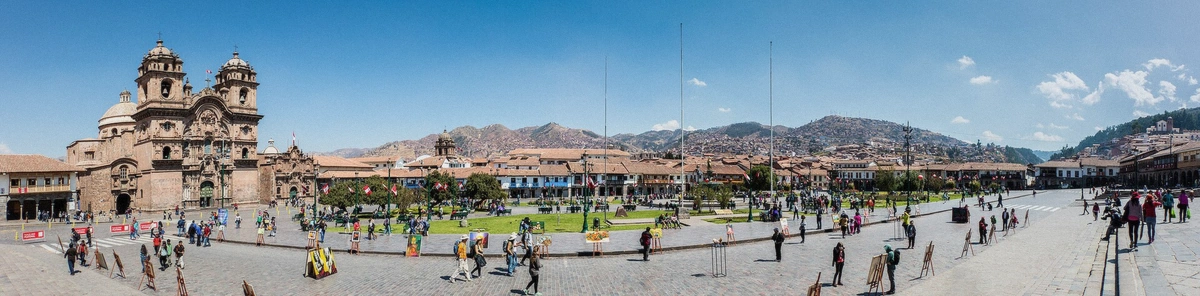
Where most Peru budgets are actually built: Cusco's plaza frames the costs before and after the citadel day. Photo: Diego Delso / CC BY-SA 4.0, via Wikimedia Commons
Reading a Quote Like an Auditor
Most travellers meet private tour pricing as a single number over WhatsApp. Treat every quote as a component list with a margin - because that is what it is - and three questions sort a fair operator from a hopeful one.
The three questions
First: does the price include the official entry ticket - and if so, which circuit and window? An operator who answers with a circuit name and a booking-time honesty note ('subject to availability for your date') has actually checked; one who answers 'everything included' has not. Second: which class of train, and whose bus?
The bundle listings ride Expedition with panoramic upgrades priced separately - a quote that hides the class is quoting a downgrade. Third: what exactly happens if the circuit I want is sold out? The honest answers - in-person purchase at the Cultural Centre, a fallback circuit, or a refund clause like the last-minute listing's - all exist; silence is the tell.
What margin is normal
On the Aguas Calientes listings, a fair margin over component cost runs roughly a quarter to a third of the ticket price - the operator's cut for securing scarce windows and carrying the coordination labour. On the Cusco days, where the operator stacks car, rail allotments and a full staffed day, margins read higher in absolute terms and thinner in percentage ones. A quote dramatically under component cost is not a deal; it is a different product - usually unlicensed guiding, a pooled 'private' group, or a ticket that does not exist yet and may not exist at all.
Where the Extra Money Actually Changes the Day
Priced from the live listings, the ladder from $98 to $590 buys four distinct upgrades. Knowing which one you are paying for keeps the premium honest - and keeps you from buying upgrades you will never notice.
The four rungs
Rung one: exclusivity - the guide-only rate buys a guide who answers only to your group. Rung two: inclusions - the entry ticket and bus folded into one price (the $170-199 band) so the day has no ticket lines. Rung three: journey ownership - the Cusco days ($359-390) put the whole chain on the operator's inventory, from car to rail allotment.
Rung four: compression - the premium days ($410-590) buy back hours and decisions, from valley-start boarding to a lunch that appears without anyone choosing it. Every listing on this site sits at a specific rung; the comparison table is the map. Pay for the rung you need and stop there - a traveller who values nothing above a good guide is overspending past rung one, and a family of six is underspending if it never looks at rung one at all.
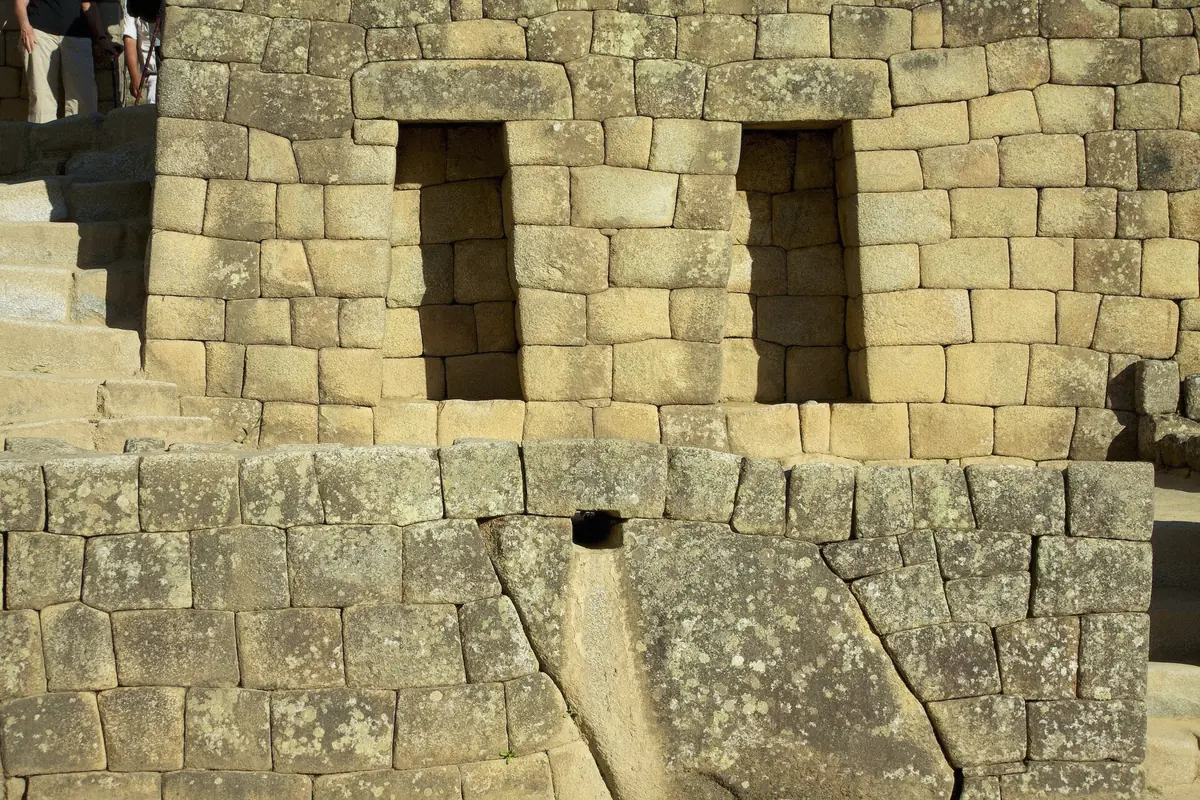
Details like this aqueduct face are what a guide points out - the things the component prices actually pay to see. Photo: McKay Savage from London, UK / CC BY 2.0, via Wikimedia Commons.jpg)
Currency and Payment Notes
Peru prices in soles, tours quote in dollars, and platforms convert at their own rates - three currencies of truth that can move an effective price several percent. The notes below keep the comparison table's figures readable in your own money.
Soles, dollars, and the card question
The official entry ticket is priced and paid in soles (S/163 at 2026 rates with the conservation fee), the bus in dollars or soles at the counter, trains in dollars on the international sites - so a DIY itinerary pays in two currencies before lunch. Card acceptance is broad on the platforms and in town, but cash in small soles notes still settles tips, market stalls and the odd rural toll. Travellers converting from other currencies should let the card do it at bank rates rather than exchanging twice; travellers carrying dollars should bring clean, unstamped notes because blemished bills are refused.
None of it changes which listing is cheapest - it just makes the number on your statement match the number on the page. Both budgets make the same closing point from opposite directions: the components are fixed, the margin is the variable, and the traveller controls only one thing - which margin is worth paying. A couple buying the cheapest guided entry and a family running the flat-rate guide made the same smart move: they named the margin they accepted before any operator named it for them.
That habit, more than any single booking, is what this page is for.