 Machu Picchu Private Tours
How to Get to Machu Picchu from Cusco
How to get to Machu Picchu from Cusco is a three-link chain - road, rail, bus - with no road at the end of it. Every route and its price parts sit below; the tours that run them are compared in the main catalog.
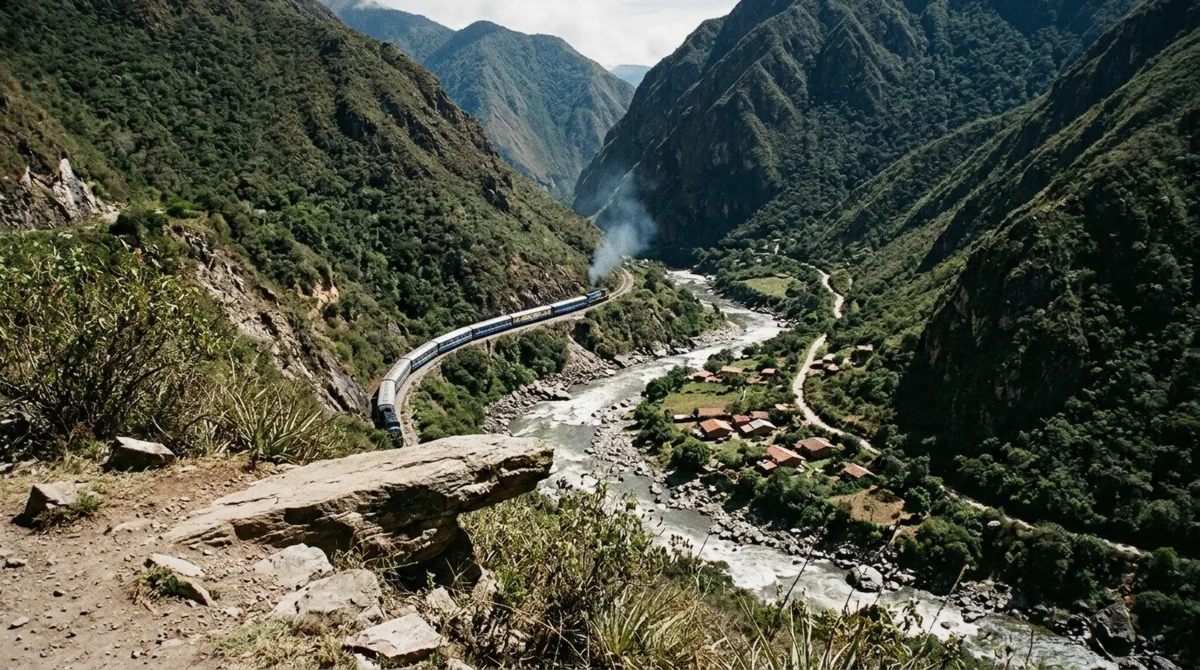
The standard-gauge line hugs the Vilcanota river through the gorge from Ollantaytambo; there is no alternative road, which makes the rail seat the trip's scarcest commodity after the entry ticket itself.
Quick answer The three-link chain every route shares
Every journey to Machu Picchu breaks into the same three links: road from Cusco to a railhead (Ollantaytambo is the standard, about 1h45 by private car), rail down the Vilcanota gorge to Aguas Calientes (about 1h45 on the tourist trains), and the Consettur bus up the switchbacks to the gate (30 minutes, US$12 each way, US$24 return). There is no road to the citadel or the town below it - everything you eat, wear and ride arrives by rail or foot. Private tours simply own all three links in one booking: the from-Cusco listings run $359-590 door to door.
Key takeaways
- Sleeping in the Sacred Valley deletes the first two hours of road
- The bimodal day chains road and rail on one ticket - no transfer coordination
- Cheapest of all: the Hidroelctrica back route - see when it is worth it
The Chain, Link by Link
Understanding the three links turns every price you see - from a $98 guide to a $590 day - into readable parts.
Link 1: Cusco to the railhead
Two hours of switchbacks and Sacred Valley floor connect Cusco to Ollantaytambo, the working railhead most services use; a seasonal departure also runs from Poroy, closer to Cusco. Private cars and shared transfers run the route daily, and it is the leg a private tour quietly earns its keep on at 04:30 - a pre-dawn road you never have to negotiate. Travellers sleeping in Urubamba or Ollantaytambo skip this link almost entirely (the valley listing is built for them).
Link 2: the rail leg
PeruRail and Inca Rail share the gorge line to Aguas Calientes - about 1 hour 45 minutes of river, terraces and cloud forest. Class is where prices move: Expedition/Explorer carriages are the workhorse (from about US$70 return), Vistadome and 360 panoramic carriages sit mid-band, and the Hiram Bingham is the luxury outlier above US$300. Check PeruRail and Inca Rail for live fares; tours usually ride Expedition with panoramic upgrades priced as extras.
Link 3: the bus up (or the stairs)
Aguas Calientes sits at about 2,040 m in the gorge bottom; the sanctuary gate is 30 switchback minutes up. The Consettur bus runs US$12 one-way, US$24 return, first departures before dawn (official tickets); the hard alternative is the stone stair climb, roughly 90 minutes of vertical that most day-trippers should not spend their legs on.
Route Options Compared
Five realistic ways to run the chain, from the standard private-tour format to the back-door budget route.
The five routes
Most travellers run the first row; the rest exist for specific constraints - time, budget, or where your hotel bed is.
| Route | Time (each way) | Cost signal | Who it fits |
|---|---|---|---|
| Private car + train via Ollantaytambo | ~1h45 road + ~1h45 rail + 30-min bus | The standard private-tour chain | Most travellers - all from-Cusco listings here |
| Bimodal bus+train ticket | One chained ticket, ~4h door to rail end | Mid-band fare, one booking | Travellers who hate transfers |
| Train from Poroy (seasonal) | Shorter road leg, longer rail leg | Premium carriages common here | Cusco stays who want less road |
| Sacred Valley start | Minutes to the station from Urubamba/Ollantaytambo hotels | Skips the Cusco road leg | Valley overnights - see the valley listing |
| Hidroeléctrica back route | ~6-7h road + 3h flat walk along the tracks | Cheapest, longest | Budget travellers with a spare day each way |
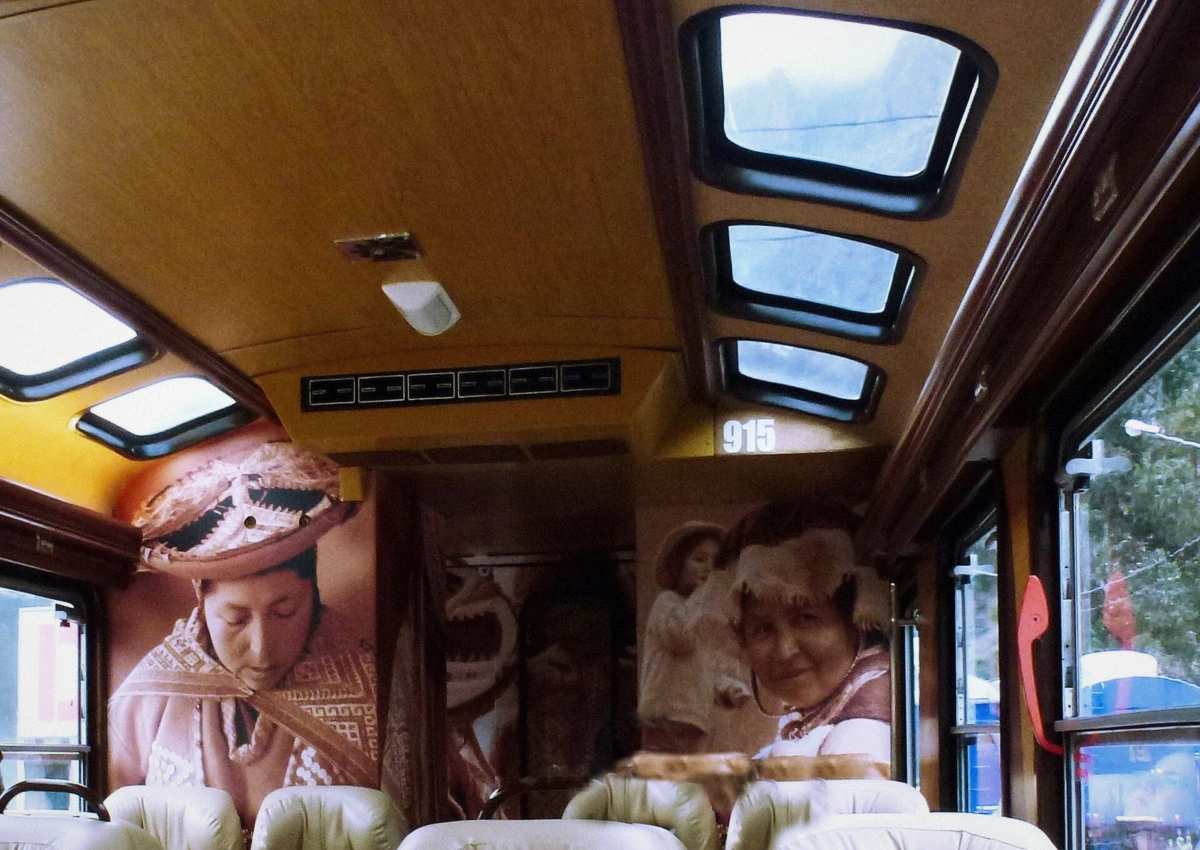
The carriage waiting at Ollantaytambo - the standard boarding point every Cusco day trip must first reach. Photo: Pierre André Leclercq / CC BY-SA 4.0, via Wikimedia Commons.-_Peru.jpg)
The Budget Route - and When It Is Worth It
The Hidroelctrica route trades a day each way for the price of a bus ticket: road to the hydroelectric plant, then a flat 3-hour walk along the rail tracks into Aguas Calientes.
The honest arithmetic
It works, thousands walk it yearly, and the riverside approach is genuinely pretty - you enter the gorge on foot the way the railway engineers did. But the road legs are long and mountainous, the walk is exposed to sun and rain with no services, and doing it as a round trip consumes two full days that the train does in hours. If Machu Picchu is the one Peru highlight on a tight budget, it is a legitimate choice; if your dates are scarce, the from-Cusco train days are the better spend.
The intermediate options
Between the extremes: bimodal tickets chain the road and rail legs on one booking (one listing here is built on the format), marshrut-style shared vans cover Cusco-Ollantaytambo for a few dollars, and the official bus tickets can be bought online ahead to skip the Aguas Calientes ticket queue at 05:30.
What a Private Tour Takes Off the Table
The chain has four failure points - sold-out trains, missed connections, ticket queues, bus lines. Owning the chain is what the higher-priced listings actually sell.
The four failure points
A door-to-door listing absorbs them: the operator holds your train seats, times the car to the train, holds your entry ticket and pays the bus. That is the difference between the $359 all-included day and assembling the same links yourself for roughly $150 in components plus four separate queue risks. The middle path - book trains and tickets yourself, add the $98 guide-only service at the citadel - suits travellers who enjoy the logistics half of travel.
Same-day or overnight?
The Cusco same-day format is a 15-hour day that works because the operator owns every link. Splitting the journey with a night in Aguas Calientes or the valley shortens each day and unlocks the earliest entry slots - the format our Aguas Calientes guide covers, and the reason the Aguas Calientes-based listings price lower: you arrive at the meeting point already rested.
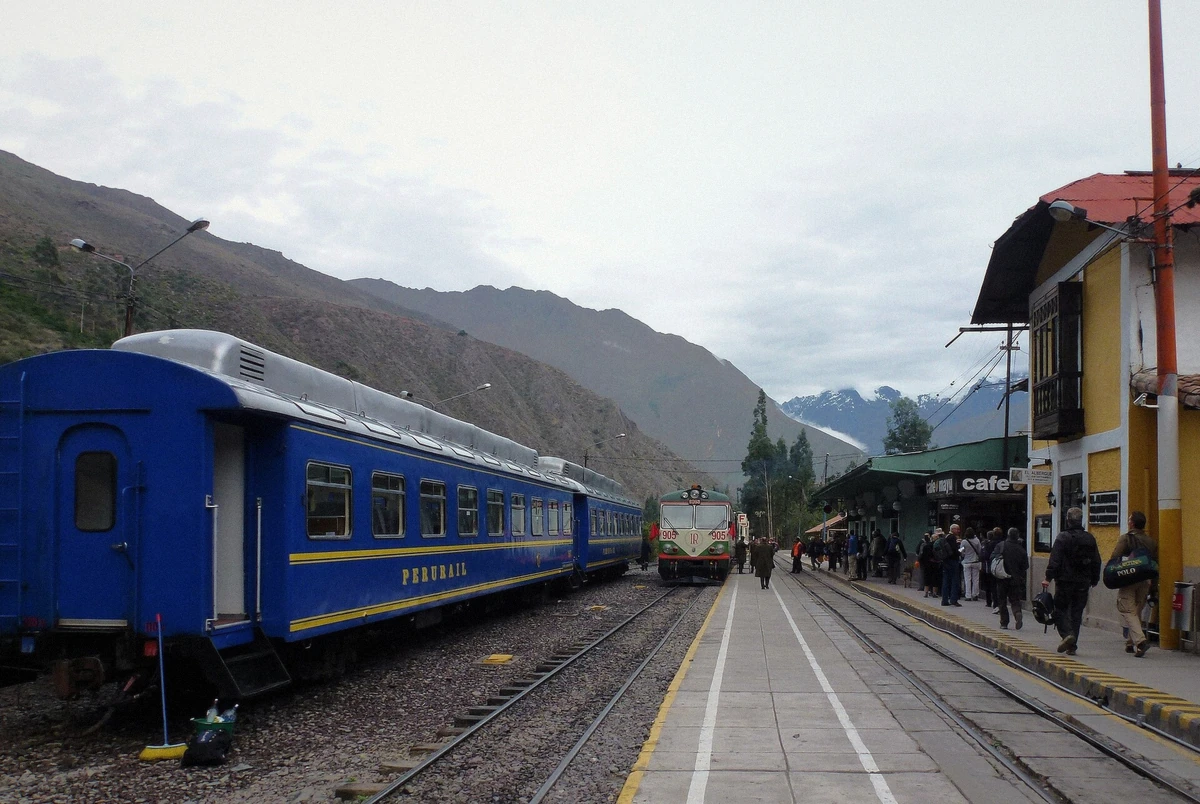
Inca Rail at the platform: the gorge leg down to Aguas Calientes starts here. Photo: Pierre André Leclercq / CC BY-SA 4.0, via Wikimedia Commons.jpg)
The Day-Trip Question, Answered With Numbers
Can you do Machu Picchu as a day trip from Cusco? Yes - thousands do it daily - and the arithmetic shows exactly what it costs: the road leg runs about 1h45, the train about 1h45, the bus 30 minutes, for roughly four hours of movement each way around a 2.5-hour citadel window. A 06:00 entry means a 03:00-05:00 Cusco pickup; a same-day traveller is home by mid-evening.
It works, it is the from-Cusco listings' entire business, and its price is the day itself. The alternatives that soften it: the bimodal through-ticket, which removes transfer friction; the valley start, which deletes the first road hour; and the overnight split, which halves both days.
Train Times and Fares at a Glance
The numbers travellers actually ask for, as of our September 2026 check - live fares move with demand and season on the operators' own sites.
The chain in minutes and dollars
Fares are per adult round trip unless noted; booking direct with PeruRail or Inca Rail shows the live range.
| Leg | Time | Cost signal |
|---|---|---|
| Cusco hotel to Ollantaytambo (private car) | ~1h45 | Bundled in the from-Cusco tours; shared vans a few dollars |
| Ollantaytambo to Aguas Calientes (train) | ~1h45 | ~US$70+ Expedition return; Vistadome/360 mid-band; Hiram Bingham US$300+ |
| Poroy departure (seasonal alternative) | Road ~1h15 + train ~3h30 | Premium carriages common on this routing |
| Aguas Calientes to the gate (Consettur bus) | ~30 min | US$12 each way, US$24 return |
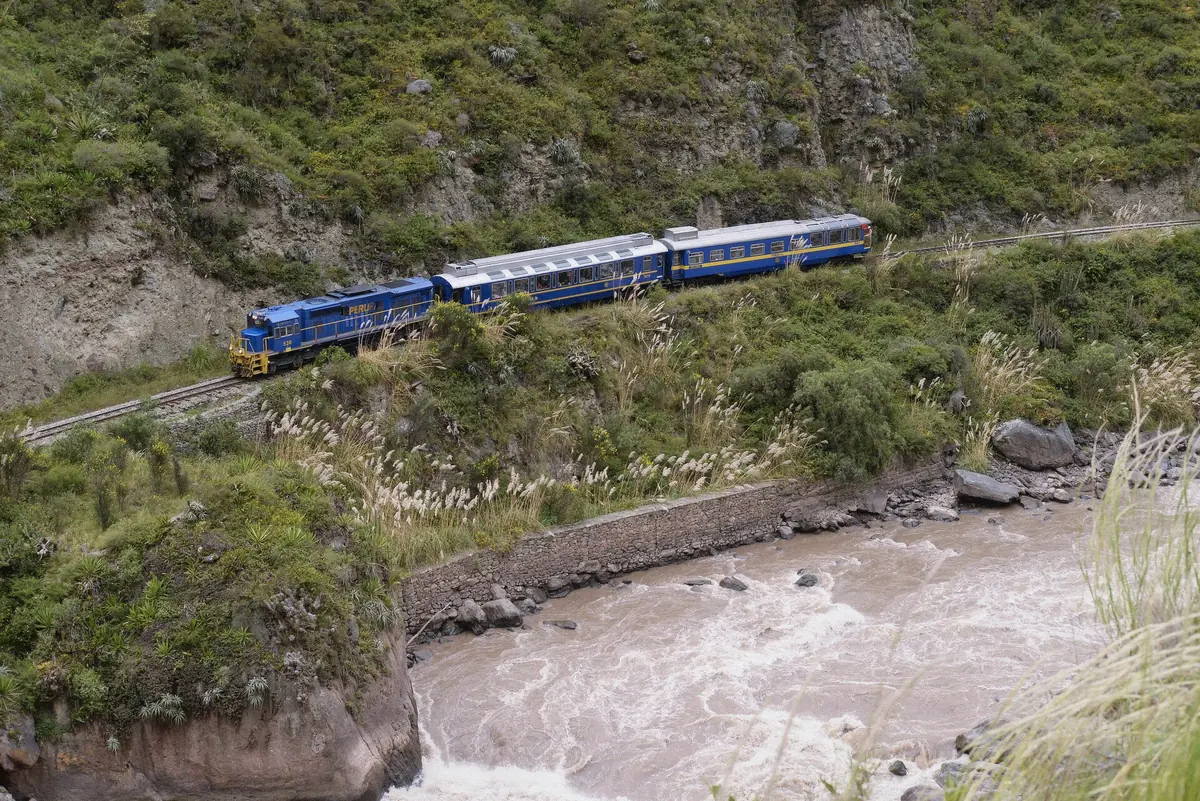
The line rides above the Vilcanota for much of the gorge - the journey's best half hour. Photo: Sashimi-b / CC BY-SA 4.0, via Wikimedia Commons
The Quickest Way There
Door-to-gate, the fastest realistic Cusco departure is the earliest bimodal or private-car-plus-train chain that lands the 06:00-08:00 entry windows: pickup around 04:30-05:00, gate before 08:00. Travellers chasing absolute minimum time should note where the minutes actually live - not on the train speed, which is fixed, but on the buffers: a valley hotel start deletes 90 minutes of road, pre-bought bus tickets delete the ticket-office queue, and an overnight below the citadel deletes the entire morning chain. The quickest way to Machu Picchu, honestly, is to have slept next to it.
Accessibility: Who Goes, and How
Machu Picchu is harder than a museum and easier than its reputation. Wheelchair users face real structural limits: the bus handles the mountain, but the citadel's stone steps and one-way staircases are not adapted, and non-folding chairs are barred outright on several listings here. Travellers with limited mobility who can manage some steps walk the lower circuits with a private guide's pacing - Circuit 3's lower sectors are the usual recommendation - and should book private formats exclusively, because group pacing is the first thing to fail.
Older travellers in ordinary health walk the circuits daily; the mountain peaks are the line where most draw it. Families with small children run the same arithmetic as the dawn question: the carrier question (backpacks for toddlers are permitted; frames check at the gate) decides more than any other booking detail. The honest service answer: state mobility needs to the operator at booking, and prefer the listings whose terms - private guide, flexible hours - can absorb them.
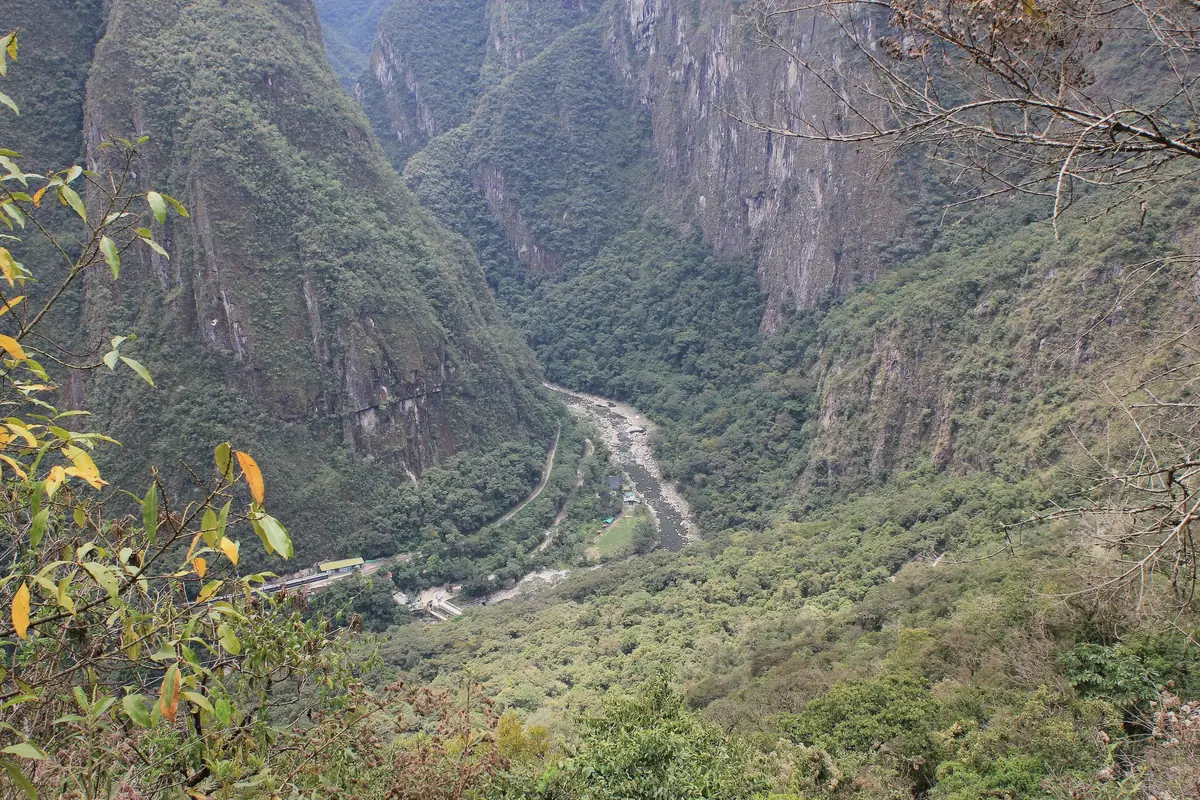
The end of the chain: terraces in cloud forest, thirty bus-minutes above the last station. Photo: Laslovarga / CC BY-SA 4.0, via Wikimedia Commons.jpg)
Common Mistakes, and the Fix for Each
The same errors recur across traveller reports and operator notes - each is avoidable at planning speed, which is why they earn a list rather than a footnote.
Avoid these eight
- Buying the tour before checking the entry window - the window dictates the train, the train dictates the road; backwards booking collapses the chain
- Assuming a road exists - no vehicle reaches Aguas Calientes or the citadel; 'driving to Machu Picchu' ends at the railhead by definition
- Scheduling zero buffer in the wet season - January-March storms occasionally pause the rail line; one flexible day saves the whole booking
- Buying the bus ticket at the dawn queue - the official online price is identical and the morning line is the day's most avoidable wait
- Taking the Hidroelctrica route on a short itinerary - the back door costs two travel days; on trips under a week it eats the holiday
- Ignoring the luggage rule - large bags do not ride the citadel; daypacks only, with the rest stored at the hotel
- Booking Poroy departures without confirming they run - the departure is seasonal; Ollantaytambo is the year-round railhead
- Forgetting the passport at the hotel for the dawn bus - the gate check refuses copies; it is the most common reason a guide sprints back downhill
Frequently Asked Questions
How do you get to Machu Picchu from Cusco?
Three links: about 1h45 by road to the Ollantaytambo railhead, about 1h45 by train to Aguas Calientes, then 30 minutes by Consettur bus up to the gate. No road reaches the citadel or the town - the train and the staircase are the only ways in.
Is there a road to Machu Picchu?
No - Aguas Calientes has no road connection at all. Everything arrives by rail (or on foot via the Hidroelctrica route), which is why every visit involves the train-plus-bus chain or a multiday trek.
What is the cheapest way to get to Machu Picchu?
The Hidroelctrica back route: road transport to the hydroelectric plant, then a flat 3-hour walk along the tracks to Aguas Calientes, plus the official entry ticket. It saves the rail fare at the cost of roughly two extra travel days round trip.
Can you drive from Cusco to Machu Picchu in one day?
You can drive to Ollantaytambo (about 1h45), but the journey stops there - the rail leg and the bus are compulsory. The full chain is why the same-day private tours from Cusco start between 03:00 and 05:00.
Do I need to book the train and bus in advance?
The train: yes in high season, when morning carriages sell out weeks ahead. The bus: tickets rarely sell out, but buying online avoids the early-morning ticket line in Aguas Calientes. Private tours include both, which is most of what their premium buys.
Train Seats: How the Market Actually Works
Two companies - PeruRail and Inca Rail - share the Ollantaytambo-Aguas Calientes line, selling the same journey in different carriages. Seats are capacity-controlled like the citadel itself: high-season mornings sell out weeks ahead, and the fare you pay moves with demand and class.
Classes without the marketing
Expedition/Explorer class: the standard tourist carriage - comfortable seats, windows, sometimes a snack trolley; the workhorse every from-Cusco private listing rides. Vistadome/360 class: larger glass, panoramic rooflines, refreshments; the upgrade worth taking for the scenic leg if the fare gap is small. Hiram Bingham: the luxury outlier - full board, observance car, a price that changes the character of the day.
Check live fares on PeruRail and Inca Rail; private tours hold allotments and often price better bundled than the walk-up fare.
Failure modes, and the fixes
Four things break this chain: sold-out morning carriages (book with the tour, or accept a later slot); a missed connection when the road leg runs long (private cars absorb it - the driver waits); the 05:30 bus queue in peak season (buy bus tickets online ahead); and wet-season line closures (hold a buffer day, or rebook to the next morning - one listing here chains the whole journey on the operator's tickets, which shortens the rebooking call to one message.
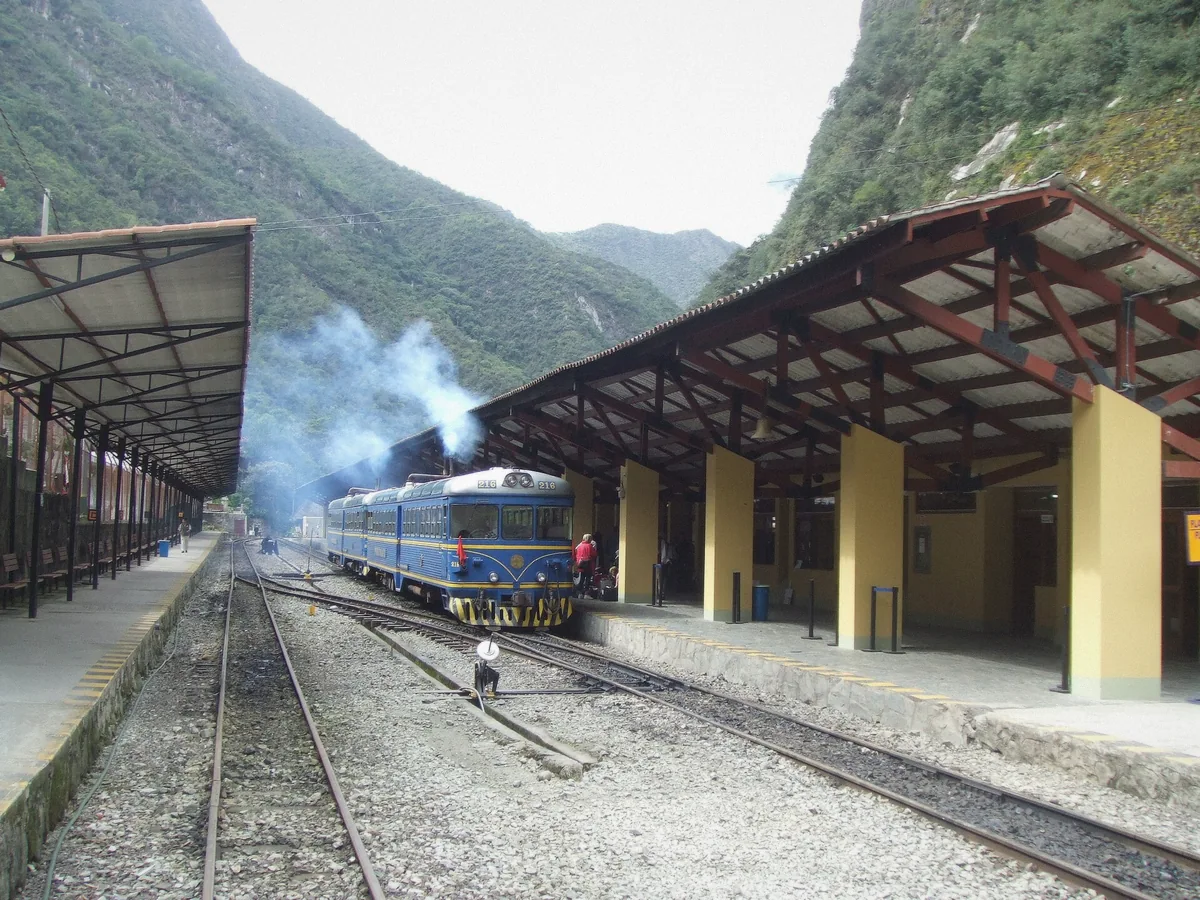
Aguas Calientes station - the rail terminus where every chain, private or DIY, hands over to the bus. Photo: Hugh Llewelyn / CC BY-SA 2.0, via Wikimedia Commons.jpg)
The Chain Checklist
Travellers assembling the journey themselves - rather than handing it to a door-to-door listing - can pin the whole chain to five bookings made in this order.
- Entry ticket on the official platform - it fixes your circuit and hour, and everything else arranges around it
- Train seats that land 60-90 minutes before the entry window
- Bus tickets (or plan the stair climb) for the 30-minute climb to the gate
- Road transport Cusco-Ollantaytambo timed to the train, with buffer for traffic
- The guide - the $98 per-group service if you want the citadel interpreted, not just seen
Book in this order
The order matters because each booking's timing constrains the next: the entry window picks the train, the train picks the road departure.
Where Each Ticket Is Actually Bought
The chain has four purchasable links, each with its own official channel and its own scalper layer. Buy at the source and the chain costs what it should; buy through a middleman and each link grows a margin.
The official channels
Everything else - tour bundles, hotel desks, street offers - resells some mix of these four, which is how to read any price you are handed.
| Link | Official channel | Scalper tell |
|---|---|---|
| Entry ticket | tuboleto.cultura.pe | Anyone selling 'guaranteed' tickets above S/163 without naming the circuit |
| Consettur bus | comprar.consettur.com | 'Skip-the-line' bus vouchers at triple fare - the line moves fast anyway |
| Train | PeruRail / Inca Rail sites | 'Last seats' at 2-3x for a carriage the site still shows |
| Guide | Licensed operators (e.g. the guide-only listing) | Unbadged 'guides' offering tours at the gate - unlicensed and unaccountable |
Why the private chain still wins the arithmetic for some
Add the four links yourself and a solo traveller can absolutely beat the bundle prices - the official channels are right there. What the door-to-day listings sell is not access but inventory: allotments of the scarcest seats (peak-morning trains, prime entry windows) plus a person whose problem the failure is. For peak dates, or for groups whose time has a price, that inventory is worth more than the margin on it - and for off-peak independent travellers, it plainly is not.
Two Working Day Plans
The chain serves two proven day shapes. Most private tours run the first; the second is what the overnight listings enable - and choosing between them is the single biggest planning decision after the circuit itself.
Same-day there and back
Leave Cusco between 03:00 and 05:00, ride the chain up, take the morning entry window, descend by mid-afternoon and reach Cusco by evening. It is fifteen hours long, it needs an operator holding every ticket (the all-included listing is the archetype), and it rewards travellers with exactly one day and no interest in packing-unpacking. Its weakness is fragility: a delayed train or a closure eats the buffer, and the weather-risk advice about wet-season buffers applies double.
Overnight-split
Travel in the afternoon, sleep in Aguas Calientes or the valley, take a dawn or early entry, return the next afternoon. Each day halves, the entry windows improve, the hot springs become possible, and the guide-only pricing works from any bed in town. It costs a hotel night and a second day of the itinerary - the cheapest luxury in most Peru plans, and the reason the town exists at all.
The chain has one final property worth naming: it is the same for everyone. No fast lane, no road, no exception for price or passport - the bus, the train and the stone step are identical for every traveller on the mountain, which is why the format decisions this site prices are the only lever that moves the day. Choose the chain you want to own, hand the rest to whoever earns it, and the journey stops being the trip's risk and becomes its overture.