 Machu Picchu Private Tours
Machu Picchu Circuits Explained
Machu Picchu circuits explained in one page: the one-way routes, the timed windows and the booking mechanics that decide a visit before any tour does. Circuit-aware listings sit in the main comparison.
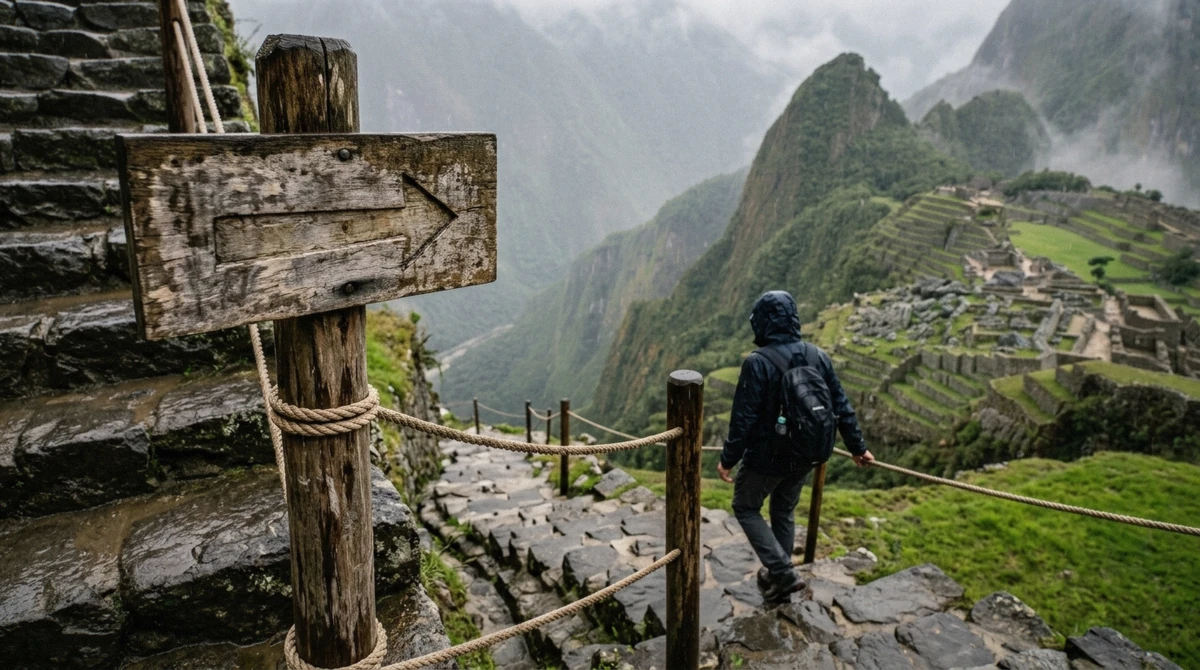
One-way routing is signed and roped inside the sanctuary; circuit changes are refused at the internal checkpoints, which is why the route choice belongs at booking.
Quick answer The system in one paragraph, then the route that fits you
Since the Ministry of Culture reorganized entry, every Machu Picchu ticket binds you to one circuit, walked one way, inside a roughly 2.5-hour window, with no re-entry. Circuit 2 is the classic: the ceremonial core with the Temple of the Sun, the Temple of the Three Windows and the Intihuatana sector. Circuit 1 owns the upper terraces and the postcard viewpoint with the peak behind. Circuit 3 covers the lower, quieter sectors and pairs with the Huayna Picchu permit. Capacity runs about 4,500 tickets a day (5,600 in peak) and the morning Circuit 2 slots disappear months ahead in the dry season.
Key takeaways
- Which listing books your circuit matters: one tour lets you choose the circuit at checkout; most assign it after booking
- Pairing a Huayna Picchu climb? That route family is Circuit 3 - see how the three routes differ
- Sold out everywhere? The last-minute in-person service works the counter stock
- Checkout circuit choice exists on exactly one listing - the circuit-policy table maps all of them
How the Circuit System Actually Works
The rules that shape every visit come from the Ministry of Culture, not the tour operators - and no listing can route around them.
One-way, one-window, no return
Your ticket names a circuit and an entry hour; you enter within the window, walk the marked one-way path, and exit without re-entry on the same ticket. Backtracking between circuits is not allowed, and a guide's route inside the sanctuary follows the assigned circuit whatever either of you wishes. Practical consequence: the itinerary you plan is a single pass - decide what matters before you step through the gate.
Official sales run through tuboleto.cultura.pe, name-matched to your passport.
Why mornings vanish first
The daily cap - roughly 4,500 entries standard, up to 5,600 in peak season - is divided across entry windows, and the early-morning slots carry the soft light, the lifting mist and (in practice) the best photography. Operators' shared advice across the listings compared here: book 2-3 months out for the best choice, and expect the first windows of the dry season to go first.
The Three Circuits, Stop by Stop
Each route is a different argument about what Machu Picchu is for. Here is what each one actually contains.
Circuit 2 - the classic (and the default for a reason)
The full ceremonial core: the Temple of the Sun with its curved wall, the Royal Tomb sector, the Temple of the Three Windows, the Intihuatana stone sector, the Main Plaza and the sacred rock. It is the longest coherent walk through what the city actually was, which is why guides default to it and why it vanishes first. Most of the photos you have seen of plazas and temple walls come from this route's sightlines.
Circuit 1 - the postcard
The upper terraces and the classic viewpoint where the citadel lies below with Huayna Picchu rising behind - the photograph on every Peru brochure, and the route that delivers it with the least walking. It trades interior architecture for the establishing shot: fewer named temples, more panorama. Photographers on a dawn slot often prefer it; history-first travellers usually do not.
Circuit 3 - the lower city (and the Huayna Picchu gateway)
The lower, quieter sectors - including the Temple of the Condor on many routings - with thinner crowds and shade. Its second job matters more: the Huayna Picchu and Machu Picchu Mountain permits attach to this circuit family, so the climbers' itinerary is decided here. If the peak behind the citadel is the point of your trip, this is your route and the Cusco day listings need the permit priced in (about US$60-85).
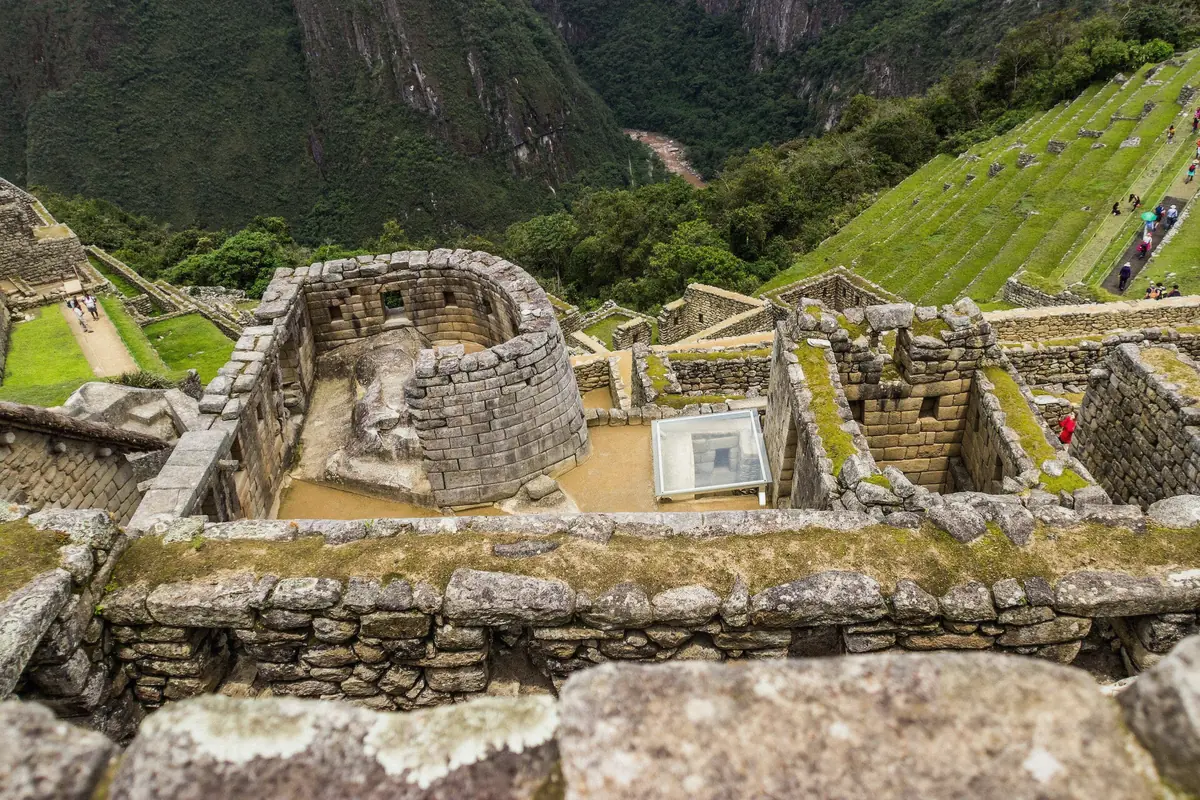
The Temple of the Sun's curved wall - a Circuit 2 exclusive under the current route map. Photo: Apollo / CC BY 2.0, via Wikimedia Commons
Choosing - and Booking - the Right One
The decision tree is short; the booking mechanic is where trips are won.
A short decision tree
First visit, want 'the Machu Picchu'? Circuit 2. Photograph above all?
Circuit 1 at a morning slot. Climbing Huayna Picchu or the big mountain? Circuit 3 family, permits secured first.
Mobility-limited or short on time? Circuit 1 or 3's shorter walks. Whatever you pick, a private guide changes the depth of the same stones, not the route.
The booking mechanic that decides
Most listings here assign your circuit after booking, from whatever official stock remains - our pick confirms by WhatsApp, early bookers choosing from fuller shelves. One listing flips it: the FLY CUSCO tour sells Circuit 1, 2 or 3 as checkout options with entry time, which is why it is the circuit-planner's listing. And when everything online is gone, the in-person service works the ~1,000 daily counter tickets - Circuit 2 first, Circuit 3 fallback, refund if neither lands.
Sub-Routes: Circuit 2A vs 2B
Circuit 2 sells under two sub-route labels, and the ticket page's 2A/2B choice puzzles every first booker. The verified difference is small but real: both sub-routes walk the full urban core and both reach the classic postcard photograph - taken since the route reorganisation from a lower terrace deck than the old Guardian's Hut perch - and they diverge on two short diversions. Sub-route 2A (Classic Route) runs the more direct line through the central sectors and includes the Temple of the Condor; sub-route 2B (Lower Terrace) adds the climb to the designated photo platform.
Choosing between them is a tiebreaker, not a decision - most guidance, and the practical experience behind it, says book whichever is available for your hour.
2A vs 2B, line by line
Figures read from the official circuit structure and operator breakdowns in September 2026.
| Feature | Circuit 2A (Classic) | Circuit 2B (Lower Terrace) |
|---|---|---|
| Urban core temples | Full walk incl. Temple of the Condor | Full walk, Condor not guaranteed |
| Classic photo | Yes - lower terrace deck | Yes - via the photo-platform diversion |
| Route shape | More direct, less climbing | One added climb to the viewpoint |
| Time inside | About 2.5-3 hours | About 2.5-3 hours |
| Pick it when | Condor and interior depth outrank the photo angle | The postcard frame is the shot that matter |
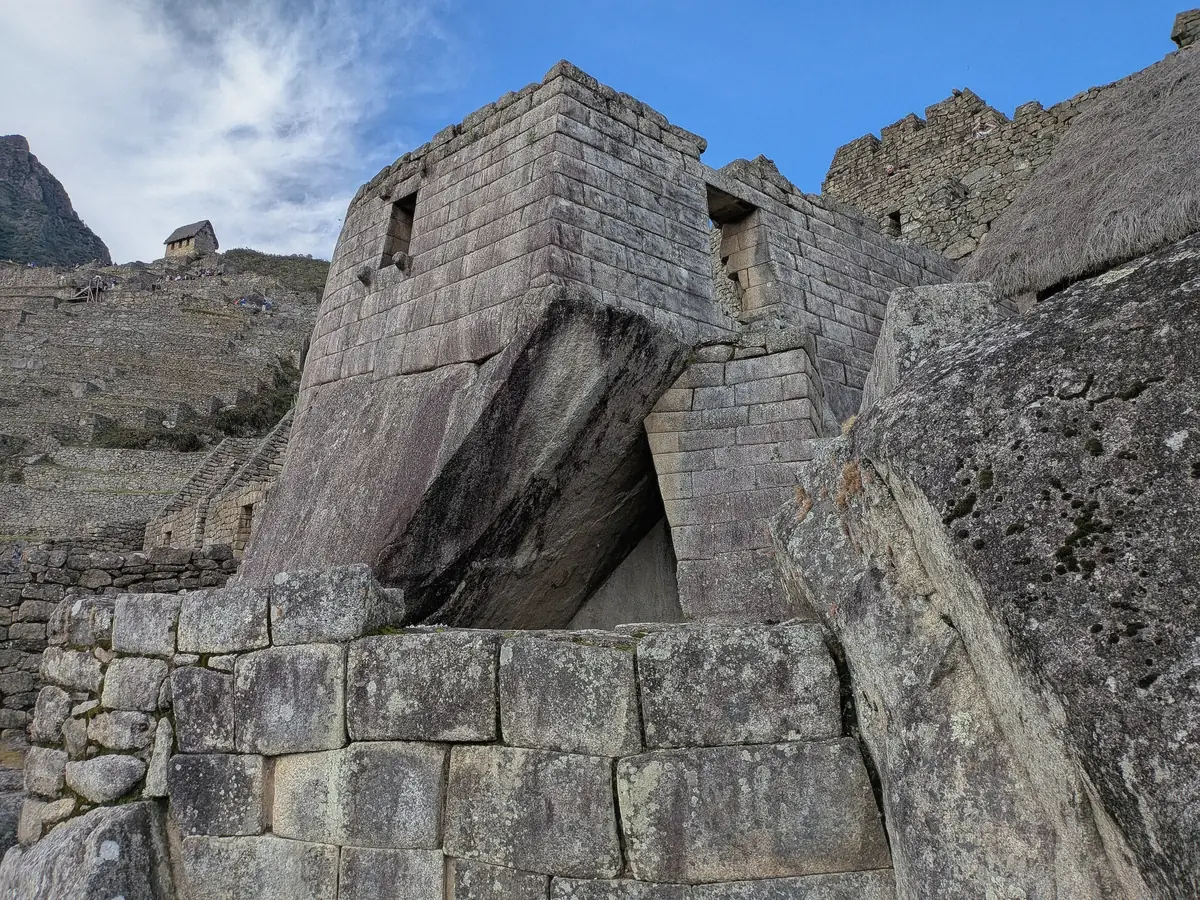
The same temple from the enclosure above: the circuit you hold decides whether this angle is yours to stand on. Photo: Gedankenstuecke / CC BY-SA 4.0, via Wikimedia Commons
How Hard Is Circuit 2, Physically?
Circuit 2 is a walk, not a hike: roughly 2.5 hours of stone steps, slopes and standing, at 2,430 m of altitude that feels easier than Cusco's 3,400 m but still thumps unacclimatized legs on the climbs. Nobody needs trekking fitness; plenty of visitors in their seventies walk it daily. The honest difficulty notes: the steps are uneven and slick when wet, the one-way route offers few benches or exits, and the sun at midday is fierce.
Travellers who manage a flat 5-kilometre walk at home manage Circuit 2; travellers who cannot should pick Circuit 1's shorter terrace walk or Circuit 3's lower sectors - the route-by-route breakdown covers both. Circuit 3 is worth it for exactly those travellers, and for Huayna Picchu climbers, whose permit lives on that circuit family.
The Circuit Rules, Quick Reference
Every rule below shapes a visit, and every one of them is enforced inside the sanctuary rather than at the booking desk - which is why reading them before paying beats discovering them at the turnstile. The listing comparison shows which operators brief travellers on each.
Rules and their reasons
Conservation plumbing, not operator whim - and none of it is waivable by any listing on this site.
| Rule | Why it exists | What it means for you |
|---|---|---|
| One circuit per ticket | Flow management on fragile stone | Choose the route before paying, not at the gate |
| Timed entry window | Rationing ~4,500-5,600 daily entries | Arrive inside your hour; lateness is refused or squeezed |
| One-way walking | Prevents bottleneck collisions | No doubling back for a missed photograph |
| No re-entry | Ticket = one continuous visit | Carry everything; the exit is the exit |
| Name-matched tickets | Anti-scalping under the cap | Passport details must match booking exactly |
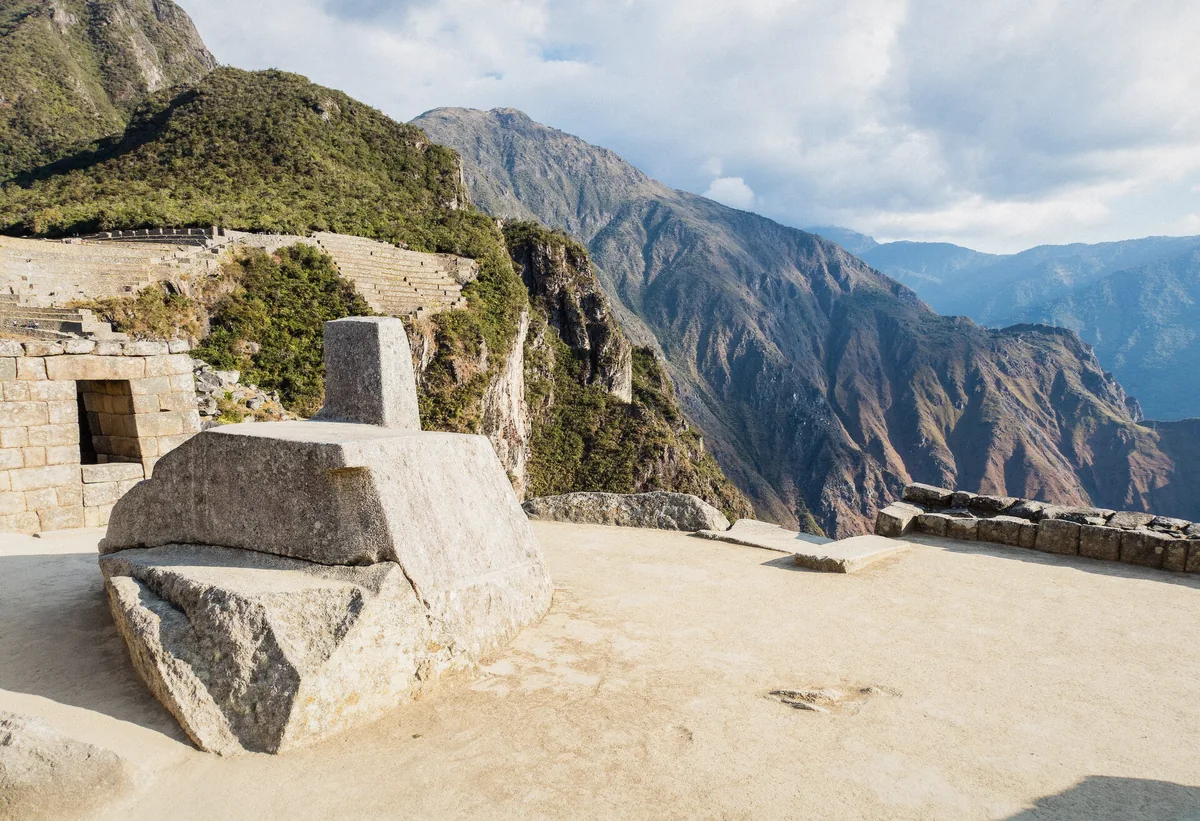
A doorway frames the plaza: circuits are a sequence of frames like this, walked one way. Photo: Diego Delso / CC BY-SA 4.0, via Wikimedia Commons
Common Mistakes, and the Fix for Each
The same errors recur across traveller reports and operator notes - each is avoidable at planning speed, which is why they earn a list rather than a footnote.
Avoid these eight
- Choosing the circuit after booking the tour - the route is the constraint that should drive the booking order, not follow it
- Confusing 2A and 2B as different experiences - both walk the urban core and both reach the postcard photo; the delta is one diversion
- Expecting the guide to bend the route - circuits are one-way and enforced; no operator can route around the Ministry's marking
- Booking Circuit 2 for a Huayna Picchu climb - the permit attaches to the Circuit 3 family; mismatched bookings are refused at the checkpoint
- Assuming re-entry - one ticket, one continuous visit; travellers planning a lunch break inside the day have planned a second ticket
- Underestimating Circuit 3 - 'the lower one' includes real stairs and the quietest sectors in the sanctuary, which is exactly why some travellers prefer it
- Chasing the old Guardian's Hut photo angle - the postcard view now shoots from the lower terrace deck on both 2A and 2B
- Leaving circuit choice to WhatsApp on a peak-date booking - stock is real; two to three months of lead time is the difference between choosing and accepting
Frequently Asked Questions
Which circuit is best at Machu Picchu for first-time visitors?
Circuit 2 - it walks the ceremonial core (Temple of the Sun, the Three Windows, the Intihuatana sector) that most people mean by 'Machu Picchu'. It is also the scarcest: book 2-3 months ahead, or choose the listing that sells the circuit at checkout.
What is the difference between Circuit 1 and Circuit 2?
Circuit 1 runs the upper terraces and the classic panoramic viewpoint with fewer named structures; Circuit 2 walks the ceremonial heart - temple by temple through the city itself. Photographers often want 1 at dawn; history-first visitors want 2.
Is Circuit 2 the classic route at Machu Picchu?
Yes - Circuit 2 is the route marketed as the classic visit and the one most guided tours default to. Its morning windows sell out months ahead in the dry season; the daily cap of roughly 4,500 (5,600 peak) entries makes it the ticket that disappears first.
Do I need a guide for my circuit?
Under 2026 rules standard circuit tickets can be entered without a guide on many slots, though treks and certain routes require one. Every listing compared here include a licensed guide or offer one - the practical question is depth, not permission.
Can I switch circuits once inside Machu Picchu?
No - the ticket binds one circuit, one direction, roughly a 2.5-hour window, no re-entry. Circuit changes inside the sanctuary are not permitted under Ministry of Culture rules, which is why choosing the right circuit at booking matters more than any other tour decision.
Which Listing Books Which Circuit
The route you walk is booked, not chosen at the gate - and the listings compared here handle that booking differently. The table below is the practical core of this page: match the circuit policy to your trip, then read the full comparison for price and fine print.
Circuit policy by listing
Policies reflect the operators' own booking pages at our September 2026 check; a listing that confirms 'after booking' is relying on live official stock at that moment.
| Listing | Circuit policy |
|---|---|
| Circuit 2 private tour (FLY CUSCO) | You choose Circuit 1, 2 or 3 at checkout, with entry time |
| Our pick (Wonders of Peru) | Circuit and time confirmed by WhatsApp after booking, from official stock |
| Guide-only service (TreXperience) | You bring your own ticket - any circuit you booked |
| Small-group entry (Treppid) | Preference noted at booking, assigned by availability |
| Last-minute service (Peru Trekkers) | In-person purchase: Circuit 2 first, Circuit 3 fallback, refund if neither |
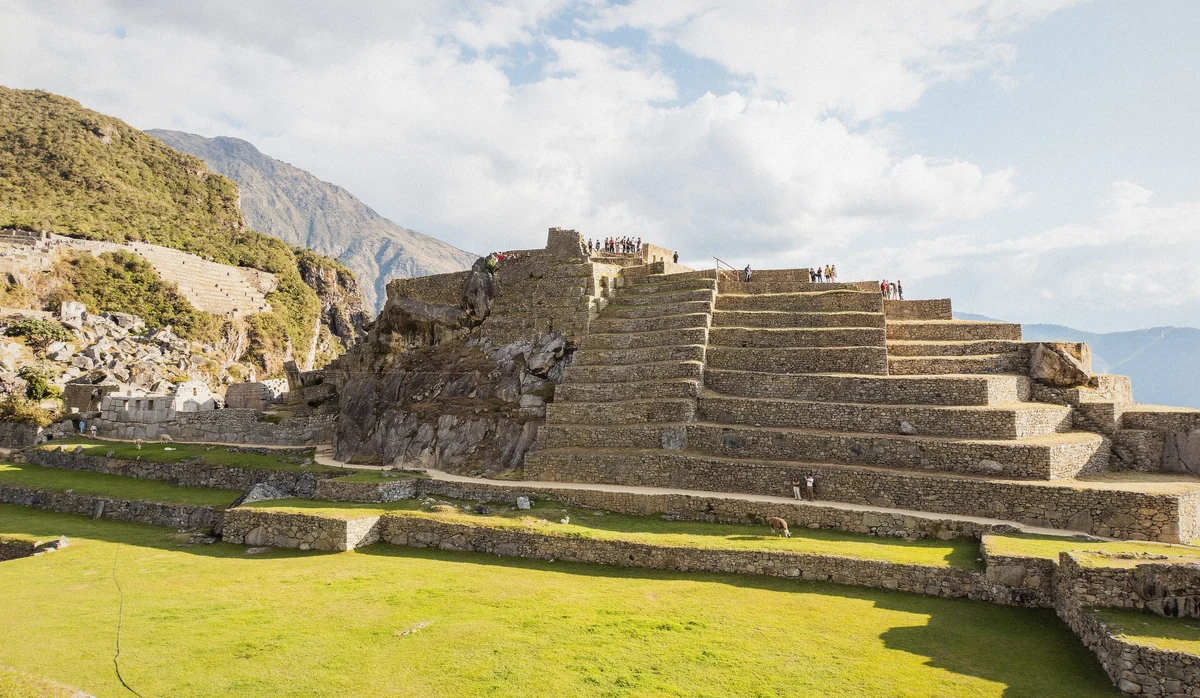
The terrace levels that Circuit 1 holds - the postcard sector the other routes only glimpse. Photo: Diego Delso / CC BY-SA 4.0, via Wikimedia Commons
Three Circuit Mistakes That Cost a Visit
Most circuit disappointment is decided at booking, not on the mountain. Three mistakes account for most of it.
1. Booking the trip before the circuit
Flights, hotels and trains are commitments; the circuit is the constraint that should shape them. A traveller fixed on the classic route books the morning Circuit 2 window first - or the checkout-menu listing - and fits the rest of the itinerary around it, not the reverse.
2. Assuming a guide can change the route
Guides walk only the assigned circuit; the one-way rules are enforced inside the sanctuary and no operator can route around them. What a good private guide changes is depth and pace within the route you hold.
3. Ignoring the exit
Circuits end at different points, and the walk back to the bus - or onward to a second-circuit hike - is part of the hour maths. Travellers pairing the visit with Huayna Picchu should treat Circuit 3's gateway role as the deciding fact, and price the permit into the day as the Cusco listings' honest notes already do.
Circuits for Special Cases
The generic advice - Circuit 2 for a first visit - bends for specific travellers. The table maps the common cases to the route and the slot that serve them, with the listing type that usually delivers each.
Match the case to the route
Mobility, small children, photography and repeat visits each change the calculus; the listings' fine print then decides whether the slot is deliverable.
| Traveller | Route that fits | Slot and notes |
|---|---|---|
| First visit, general | Circuit 2 | Morning window, booked 2-3 months out in dry season |
| Photography-first | Circuit 1 | First-entry slot for emptiness; see the dawn guide |
| Huayna Picchu climber | Circuit 3 family | Permit attached; morning entry, full day budgeted |
| Toddlers / limited mobility | Circuit 1 or 3 | Shorter walks, fewer stairs; a private guide sets the pace |
| Second visit | The circuit you skipped | Afternoon entries are underrated and cheaper on stock |
One route per ticket - and why second visits differ
Because re-entry is barred and circuits are one-way, the citadel you see is a function of the ticket you hold. Repeat visitors almost always flip routes on the second day - the Circuit 2 pilgrim buys Circuit 1's postcard, the photographer returns for the temples - and the pricing logic flips too: a second-day afternoon entry costs less in competition and delivers a citadel the morning crowds never see. Travellers planning the double should say so when booking, because the operators' ticket-hunting is per-window, not per-trip.
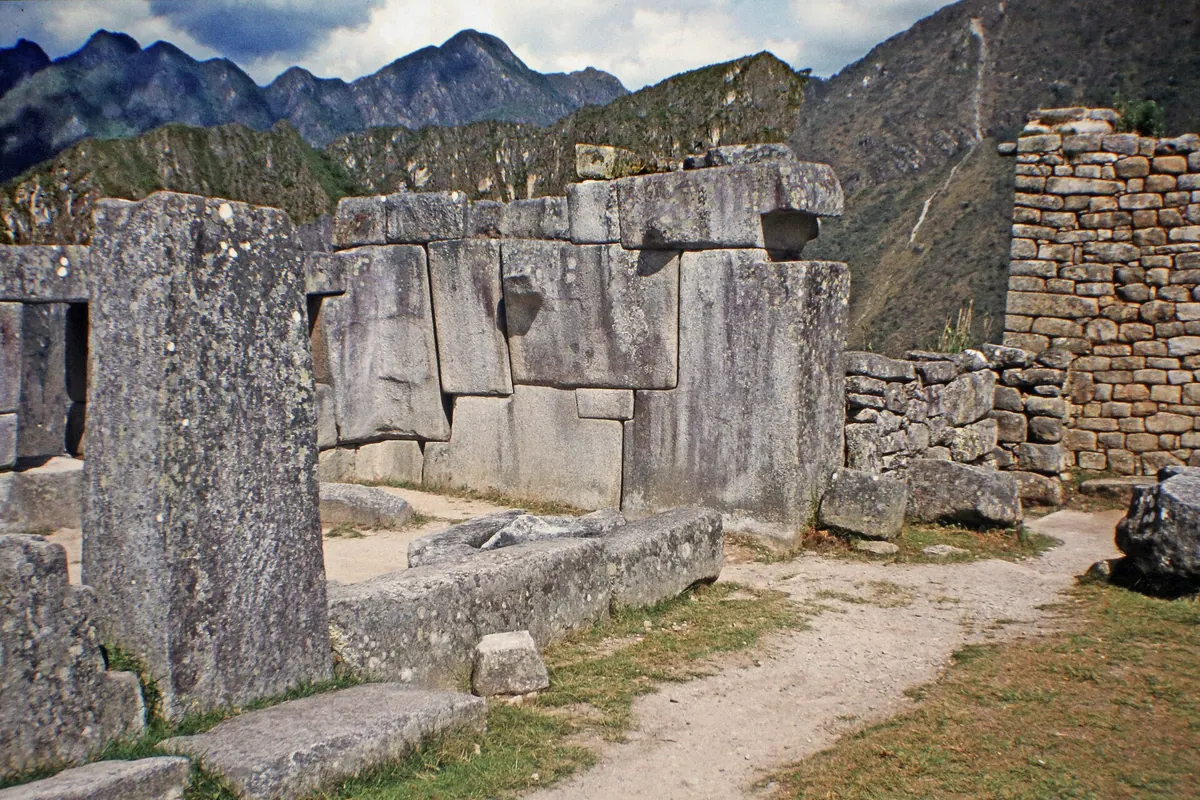
The plaza and the peak: the composition Circuit 2 delivers from the ground, Circuit 1 from above. Photo: W. Bulach / CC BY-SA 4.0, via Wikimedia Commons
The Slot Clock: How Entry Windows Actually Run
Every circuit ticket names an hour. What that hour means in practice - how long you have, what happens if you are late, and how the windows drain through the day - is the clockwork behind both the circuit choice and the morning crowding.
Windows, late arrivals, and the afternoon lozenge
Your window is an entry hour, not a duration: you enter within it and then walk your circuit at whatever pace the roughly 2.5-hour site limit allows. Arrive late and the turnstile decision sits with the rangers - minutes grace is common, an hour is not. The morning windows carry the light and the crowds; by early afternoon the entries thin dramatically, and the last windows of the day offer a citadel that feels almost private under lower light - a legitimate pick for travellers who value quiet over the classic morning photograph, and a much easier ticket to secure late.
The clock interacts with buses too: the ride up eats 30 minutes, so a 06:00 window means a 05:20-ish bus, and the first-entry logistics follow from that single arithmetic.
Why the Circuit System Exists
The one-way circuits frustrate travellers who remember - or read about - the freer site of a decade ago. Understanding why the Ministry of Culture built them makes the rules feel less like obstruction and predicts where they will tighten next.
Flow, erosion, and the cap
Machu Picchu's popularity outgrew its stones: foot traffic on unmanaged routes was eroding terraces and compacting the archaeology itself. The circuits channel several thousand daily visitors along durable paths, past the load-bearing structures, without backtracking eddies - the same flow engineering a museum builds with rooms, applied to a mountainside. The daily cap and the timed windows are the same instrument at a coarser scale: roughly 4,500 standard entries, up to 5,600 on peak configurations, enforced by name-matched tickets on the official platform.
For visitors the practical translation is simple: the system trades a little freedom for the site's survival, and every operator listing - even the ones that sell in-person rescue tickets - operates entirely inside it. Travellers who accept that early plan better trips than those who fight it at the gate. Pull the threads together and the circuit decision is three questions answered in order: which route's contents you care about, which sub-route and window your date can actually secure, and which listing puts that ticket in your hands with terms you accept.
Everything else on this page is reference detail for those three answers. Travellers who decide in that sequence book once; travellers who book first and research later meet the WhatsApp negotiations the operators' fine print is written for.