 Machu Picchu Private Tours
What to Wear at Machu Picchu
What to wear in Machu Picchu is a three-seasons-in-one-morning problem with a strict gate list attached. The kit below passes both tests; the tours that brief it are compared in the main catalog.
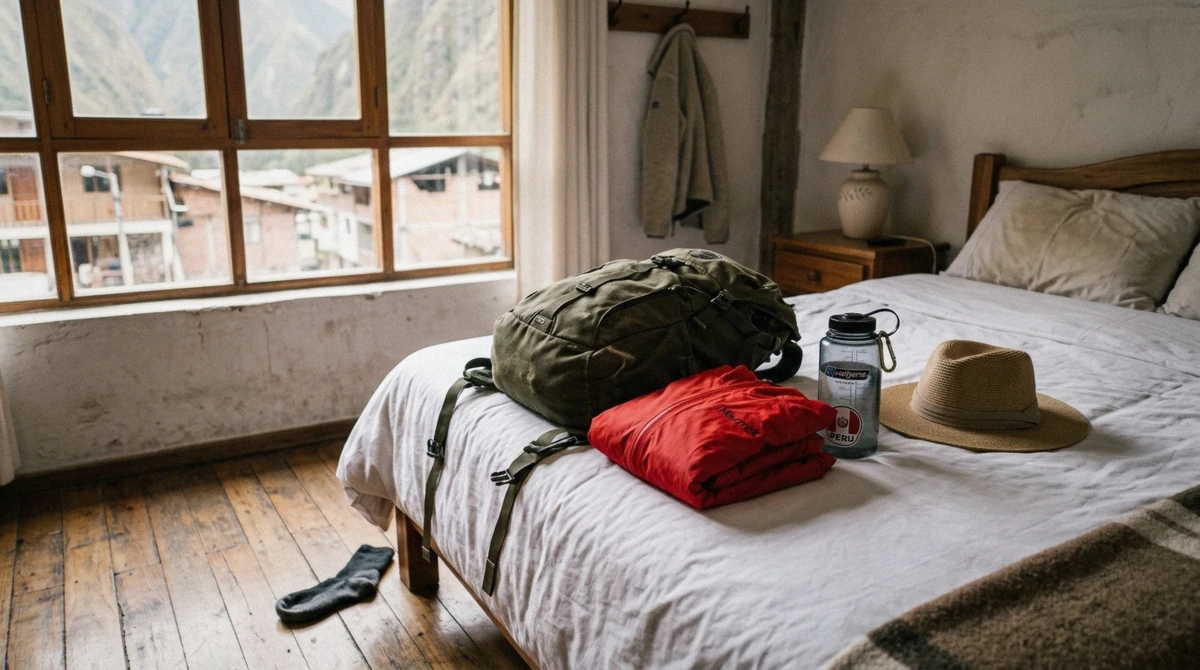
The night-before layout in an Aguas Calientes hotel: layers, shell, water and passport - everything the gate admits, nothing it confiscates.
Quick answer The list in four lines, then the banned-items table
Dress for three seasons in one morning: near-single-digit cold at a dry-season dawn, a hot midday at 2,430 m, and a shower that can arrive in any month. That means layers, a hooded rain shell, real walking shoes, and high-SPF sun protection - plus your original passport, without which the name-matched ticket does not open the gate. Just as important is what stays behind: umbrellas, tripods, drones, and walking sticks without rubber-tipped covers are all turned away, and large backpacks are not admitted.
Key takeaways
- Carrying a daypack? Keep it small - the gate admits compact bags only
- Dawn-slot visitors need the warm layer most - see the first-entry guide
- Every tour listing here repeats this kit list; the guides enforce it the hard way
- Pack against the working checklist the night before, not the morning of
The Layering Logic
Machu Picchu's climate is two climates in one site: cloud-forest humidity below, thin mountain air above, and a sun that turns vicious once the ridge clears.
Morning, midday, and the hour between
Start with a moisture base layer plus a warm mid-layer (fleece or light down) you can stash by ten; add the rain shell on top in any month - dry-season mornings are cold but the wet season can open drizzle at the gate. By midday the sun at altitude is the hazard: long sleeves you can roll, a brimmed hat, and sunscreen you reapply. Guides watch tourists shiver at 06:30 and burn by 10:30 every day of the year; the wardrobe is the answer to both.
Footwear that earns its keep
Circuits are stone steps, irregular and often slick - trainers with real tread manage the classic routes; trail shoes earn their keep on wet-season mornings or if you tack on a mountain climb. Sandals and smooth soles are how ankles get sprined; the private tours all repeat the same line in their bring-lists because they see the rolls and stumbles every week.
The Banned List That Ruins Mornings
The sanctuary's gate rules are stricter than most first-timers expect, and confiscated items do not wait for you at the exit.
What gets turned away
The list below mirrors what the operators' own listings print - and what guides watch happen at the turnstile daily. Pack against it the night before; storage in Aguas Calientes exists but costs time you paid a tour to save.
| Item | Status at the gate | Instead |
|---|---|---|
| Drones | Prohibited | Leave at the hotel; aerial footage is not permitted |
| Tripods / selfie sticks | Prohibited | Shoot handheld; guides help with angles |
| Umbrellas | Prohibited | Pack a hooded rain shell |
| Walking sticks (metal tips) | Banned unless medically required with rubber tip covers | Trekking poles stay at the hotel for most visitors |
| Large backpacks | Not admitted | Small daypack (about 20L) with everything inside |
| Drones, sprays, alcohol | Prohibited | Biodegradable sunscreen and repellent instead |
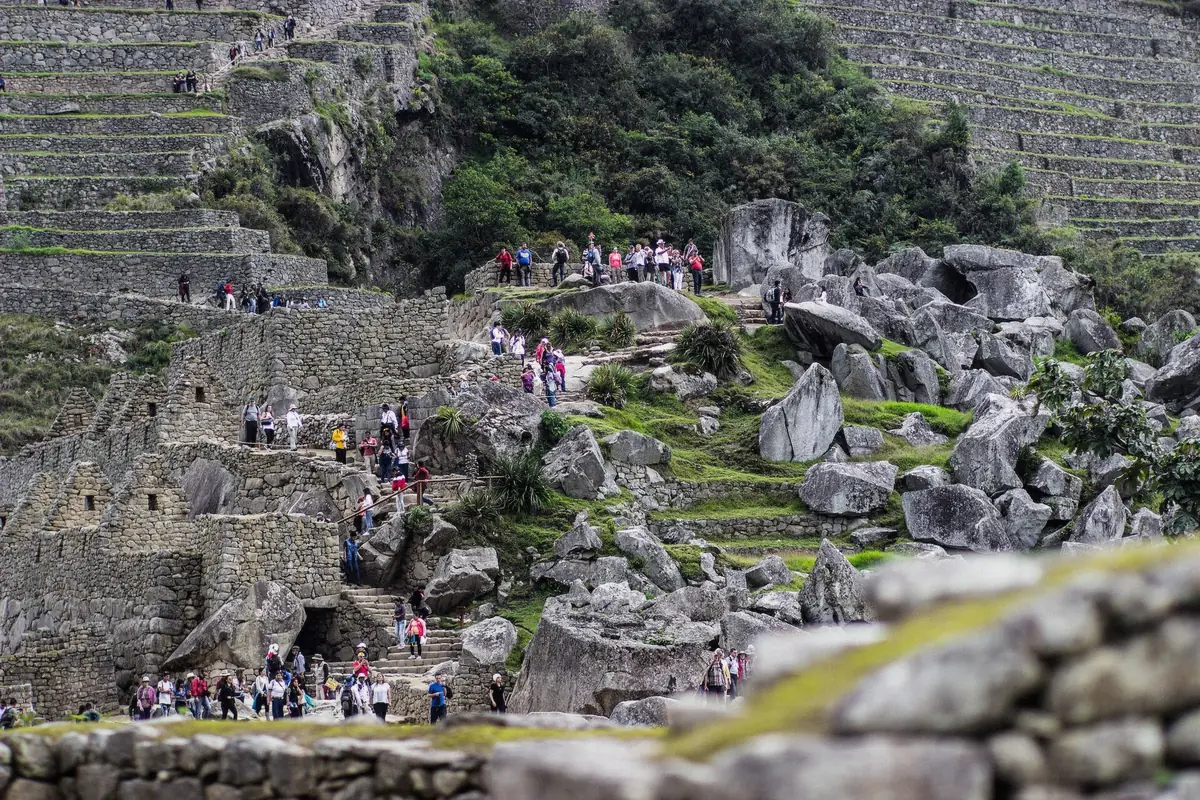
Real steps, real grade: the circuits' stone staircases are the reason the shoe argument exists. Photo: Apollo / CC BY 2.0, via Wikimedia Commons
The Working Packing List
Everything that actually earns its place in a 20-litre daypack for a guided circuit visit.
Carry, wear, wear spares
In the pack: water (1-1.5L), snacks (eaten outside the protected core, where food is restricted), sunscreen and lip balm, insect repellent, a light layer plus the rain shell, toilet paper and soles cash, your passport, and the printed or phone ticket. On you: the layers, real shoes, hat and sunglasses. camera or phone with a full battery - cold mornings drain them, and the citadel does not sell chargers.
Jeans, the 5-4-3-2-1 Rule, and Other Packing Lore
Can you wear jeans to Machu Picchu? Yes - there is no dress code - and on a dry-season day plenty of travellers do. The honest case against denim is practical: it weighs double when rain soaks it, dries overnight-slow, and restricts the step-up stride the circuits demand; travel trousers or running tights simply do the job better.
The viral '5-4-3-2-1 rule' (five tops, four bottoms, three pairs of shoes, two jackets, one hat for a week away) compresses well to a citadel daypack: one base layer, one warm mid, one shell, one hat, real shoes - everything else on the working checklist is consumables and documents. And the toilet-paper question earns its frequent asking: the sanctuary's toilets sit at the entrance only, paper provision is unreliable, so a travel roll in the daypack is standard kit rather than paranoia.
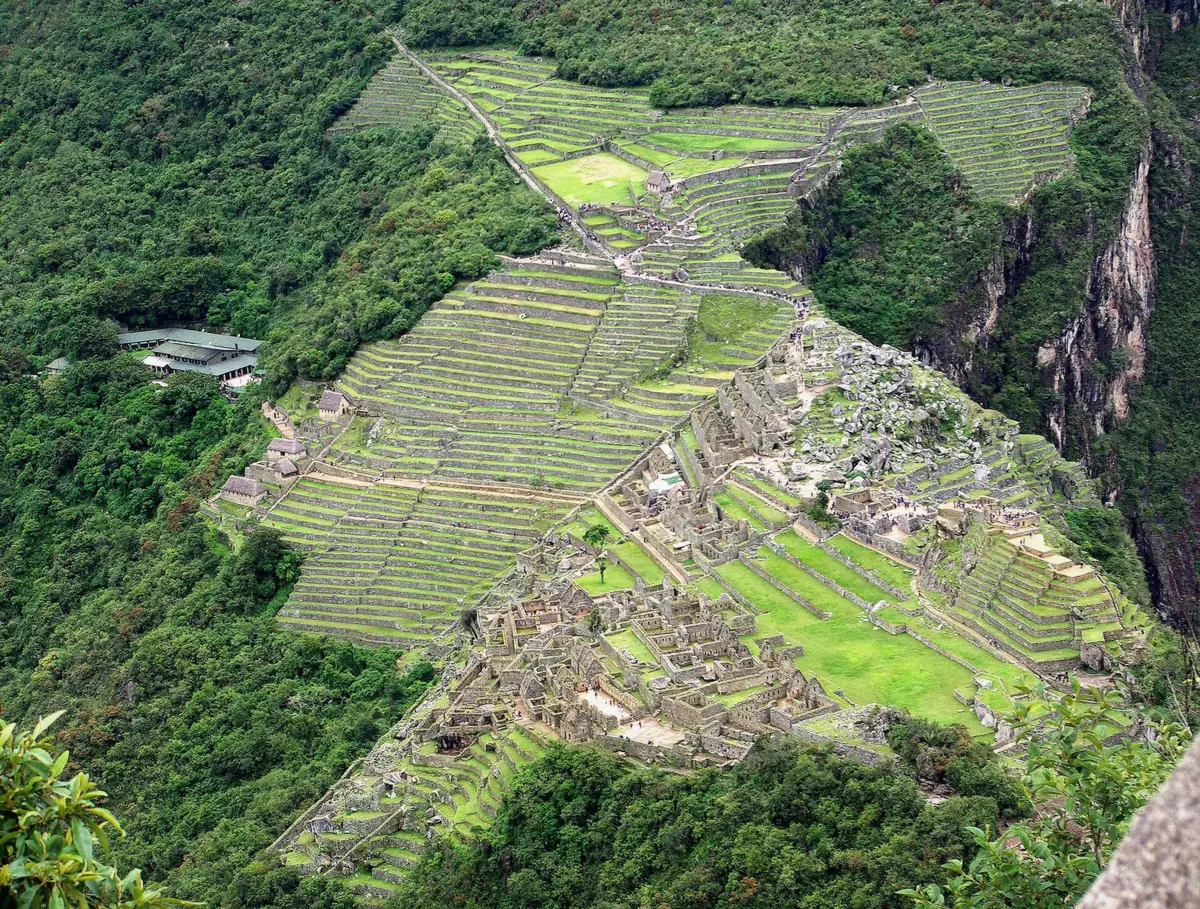
The full sanctuary from the upper trail - the longest view requires the walk this kit list equips. Photo: Steve Bennett / CC BY-SA 3.0, via Wikimedia Commons
The Twelve Items, Judged Honestly
The checklist works; travellers still ask which items deserve money and which deserve whatever is in the drawer. Item by item, the honest verdicts - spend where failure is cold, wet or refused at the gate.
Spend, save, or drawer
The gate-list items are non-negotiable whatever the budget; everything else has a cheap version that works. The kit's last secret is that it barely matters once the basics are right: past the gate, with dry feet and a working sun hat, the citadel does all the work and the daypack carries itself. Pack the night before, weigh the bag once, and stop optimising - the travellers who arrive over-prepared in every category except the passport are a fixture of every guide's war stories, and this page exists so you will not be one of them.
| Item | Verdict | Why |
|---|---|---|
| Rain shell | SPEND | The single most-used item in any month |
| Walking shoes | SPEND (fit over brand) | Wet stone punishes smooth soles and wrong sizes |
| Warm mid-layer | SAVE - any fleece works | Dawn cold is cold, not technical |
| Daypack 20L | SAVE | Gate rules care about size, not logo |
| Sun hat + SPF | SAVE the hat, SPEND the SPF | Altitude UV is the real cost of skipping |
| Repellent, TP, snacks | DRAWER | Standard travel kit; buy refills in Cusco |
| Passport pouch | DRAWER - but check it twice | The one item with no replacement story |
Common Mistakes, and the Fix for Each
The same errors recur across traveller reports and operator notes - each is avoidable at planning speed, which is why they earn a list rather than a footnote.
Avoid these eight
- Packing for the forecast instead of the day - one itinerary holds cold dawn, hot midday and a shower; layers are the only forecast that works
- Bringing an umbrella - banned outright at the gate; the rain shell is the item that passes
- Wearing brand-new shoes on the biggest walking day of the trip - break them in Cusco's streets first, or accept the blisters as a souvenir
- Carrying the big backpack - large bags are refused; the 20-litre daypack is the entire permitted wardrobe
- Leaving the passport at the hotel 'because the guide has our details' - the original document is checked at the turnstile, every traveller, every time
- Bringing metal-tipped trekking poles - banned without rubber covers; the stairs rarely justify the luggage anyway
- Skimping on sunscreen for cloud cover - the citadel's altitude burns through overcast; the midday sun is the day's real hazard
- Forgetting small bills - toilets, tips and the market economy run on coins and small soles notes, not cards
- Wearing the passport pouch on the outside - the sanctuary is safe; the pouch is for pickpocket queues, and visible valuables attract what they are meant to deter
- Packing the rain jacket for the summit and the poncho for the town - one shell serves both; duplicates are dead weight on stairs
- Branding the trip around the perfect outfit - the photographs are taken against stone and sky; the hat that shades beats the hat that matches
- Forgetting the change of shirt for the return leg - the bus and train after three walking hours is where the dry layer earns its keep
- Skipping the lip balm - altitude and wind crack lips faster than sun burns skin, and every traveller discovers this at hour two
- Packing a poncho AND a rain jacket - one shell serves both legs of the day; duplicates are dead weight on stairs
- Dressing the photographs instead of the weather - the pictures are taken against stone and sky; the hat that shades beats the hat that matches
- Skipping the spare shirt for the return - the bus and train after three walking hours is where the dry layer earns its keep
- Forgetting that socks are part of the shoe decision - wet-season mornings punish cotton socks with every step; synthetic or wool blends are the quiet upgrade
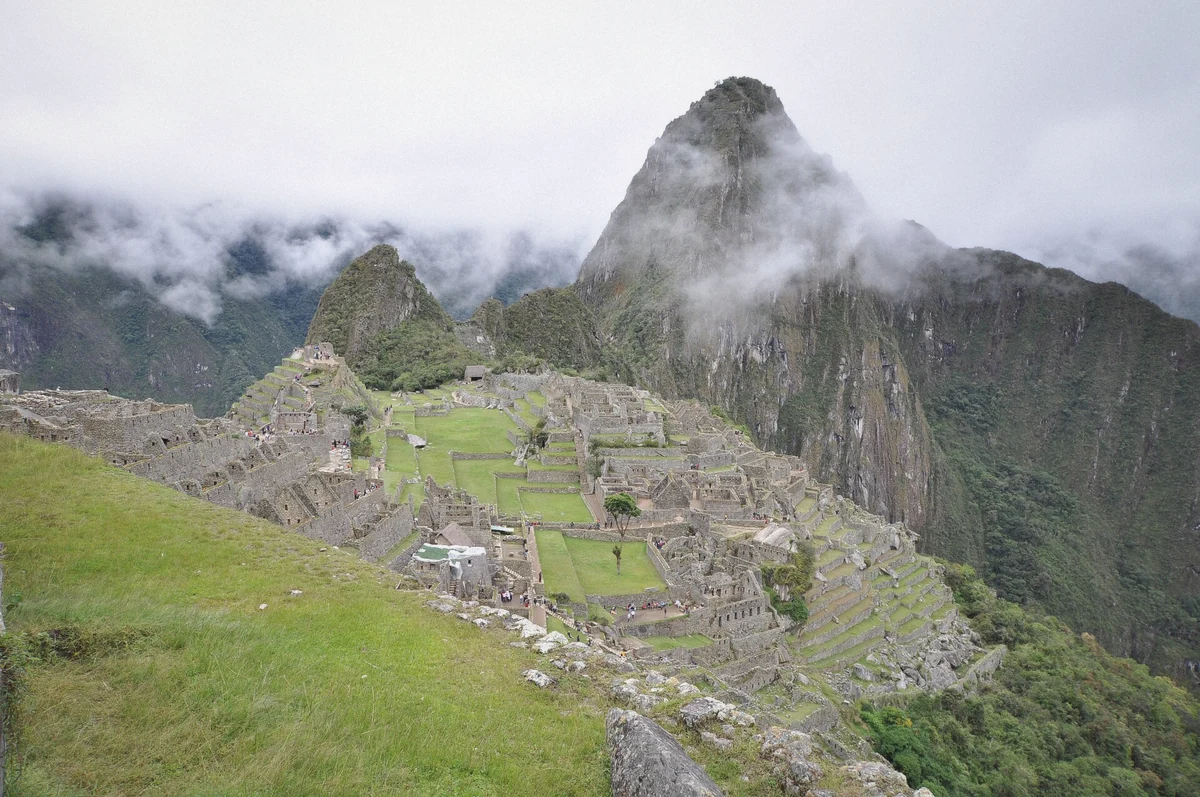
Stone stairs inside the sanctuary: grippy soles and free hands make the difference. Photo: Jorge Láscar from Australia / CC BY 2.0, via Wikimedia Commons.jpg)
Frequently Asked Questions
What should I wear to Machu Picchu?
Layers over real walking shoes: a warm mid-layer for the cold dawn, a hooded rain shell in any month, sun hat and long sleeves for the midday UV at altitude. The classic formula is cold-weather morning, beach-weather noon - dress to strip down and stash.
Can you bring a backpack into Machu Picchu?
Small daypacks (roughly 20 litres and under) are admitted; large backpacks are not, and there is no free storage at the gate. Pack light or leave the big bag at your Aguas Calientes hotel - the day-trip listings all assume a compact pack.
Are walking sticks allowed at Machu Picchu?
Only for visitors who medically need them, and only with rubber tip covers - metal-tipped poles are banned on the stone. Most travellers should leave poles at the hotel; the classic circuits are steep but handrail-free walking, not scrambling.
Do I need my passport at the Machu Picchu entrance?
Yes - the original, physical passport, matching the name on the ticket exactly. Copies and phone photos have been refused at the gate; the ticket is issued against the passport number you give the operator at booking, so book with the same document you travel on.
Is there a dress code at Machu Picchu?
No formal code - it is an outdoor archaeological site, not a temple with covered-shoulders rules. Practical beats modest: sturdy shoes and sun protection are the real requirements, and rain shell in any month.
The Working Checklist
The same list as a gate-passable checklist - pack against it the night before, when the hotel shop is still an option.
- Original passport (the name must match the ticket exactly)
- Water - 1 to 1.5 litres, bought in town before the climb
- Snacks for the exit-side, where eating is permitted
- Sunscreen and lip balm - high SPF, reapplied at midday
- Insect repellent, biodegradable preferred
- Warm mid-layer plus hooded rain shell, whatever the month
- Small soles cash for tips, toilets and the market
- Hat, sunglasses, and a phone or camera with a full battery
In the daypack, on you
Weighed against the gate rules above: everything fits a 20-litre pack, and nothing on this list gets confiscated.
Adjusting the Kit by Season
The base list is constant; two items swap weight by season. The table covers the swing - month-by-month weather sits in the best-time guide, and the first-entry crowd should read the dawn column as their own.
Season swaps
Gloves and a warm hat sound absurd at 2,430 m until the first dry-season dawn at the gate; the wet-season swaps are about drying out, not warmth.
| Item | Dry season (May-Sep) | Wet season (Oct-Apr) |
|---|---|---|
| Warm layer | Essential at dawn; stripped by ten | Light fleece, rarely needed before nine |
| Rain shell | Carried, rarely worn | Worn at the gate, most afternoons |
| Footwear | Trail shoes optional, trainers fine | Grip soles earn their keep on wet stone |
| Extras | Gloves and hat for first-entry slots | Dry bag or liner for phones and tickets |
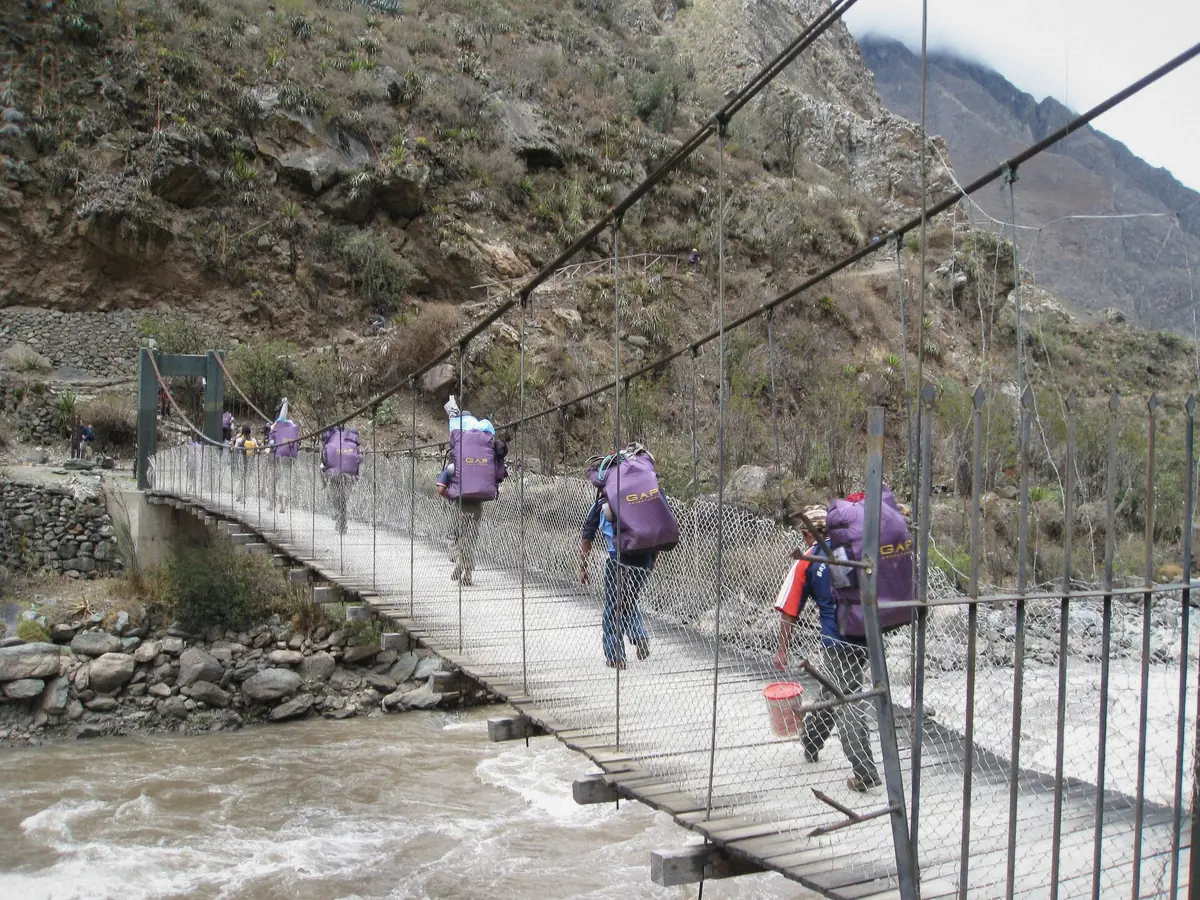
Even the approaches test footing: bridge crossings on the valley walks that feed the citadel. Photo: Chris Feser from Seattle, USA / CC BY 2.0, via Wikimedia Commons.jpg)
Families and Cameras: The Two Special Cases
Two groups pack differently: families with small children, and travellers carrying more camera than phone.
The kids' kit
Children feel the cold dawn and the midday sun more than adults and say less about both: pack their layers as real layers, not mini-grown-up afterthoughts, plus snacks they will actually eat and a small water bottle they can carry themselves - the circuits are stepped and a own-weight pack steadies a tired child better than a parent's hand on a hood. Every private listing paces to the slowest traveller, which is one of the quiet arguments for private format with young kids.
The camera kit
No tripods, no drones - the gate list is absolute - so the working camera kit is one body, one zoom, spare battery in an inside pocket (cold dawns drain them), and a microfibre cloth: the mist that makes dawn photographs also coats every lens. Guides double as spotters for the classic angles on the private listings, which buys more image quality than any lens swap on a 2.5-hour window.
Forgetting Something? Buying It in Peru
Almost everything on the list is replaceable in Cusco, at a price and a quality worth knowing before you rely on either.
Cusco versus the town below
Cusco's trekking shops and the San Pedro market area cover the list cheaply: rain shells, warm layers, hats and daypacks at market prices, with name-brand gear available at proper prices around the plaza de armas' outdoor shops. Aguas Calientes prices the same items at a premium that scales with your desperation - the town knows exactly what a rain-soaked traveller will pay for a poncho, and the famous five-sole ponchos are exactly as adequate as they sound. Sunscreen and repellent travel fine in checked luggage but cost visibly more at 2,040 m; batteries and SD cards are better bought at home.
None of this changes the gate rules - a market poncho passes where an umbrella fails - but the packing checklist is cheaper to satisfy in Cusco than below the citadel.
The one thing Peru cannot sell you
A second chance at the passport check. Every replaceable item on the list has a stall; the original passport does not, and the ticket is issued against it. Travellers who discover a mismatch - old passport number, nickname on the booking - should treat it as the evening-before emergency it is: operators can usually reissue against correct details if told in time, which is one more reason the private listings' WhatsApp coordination earns its keep.
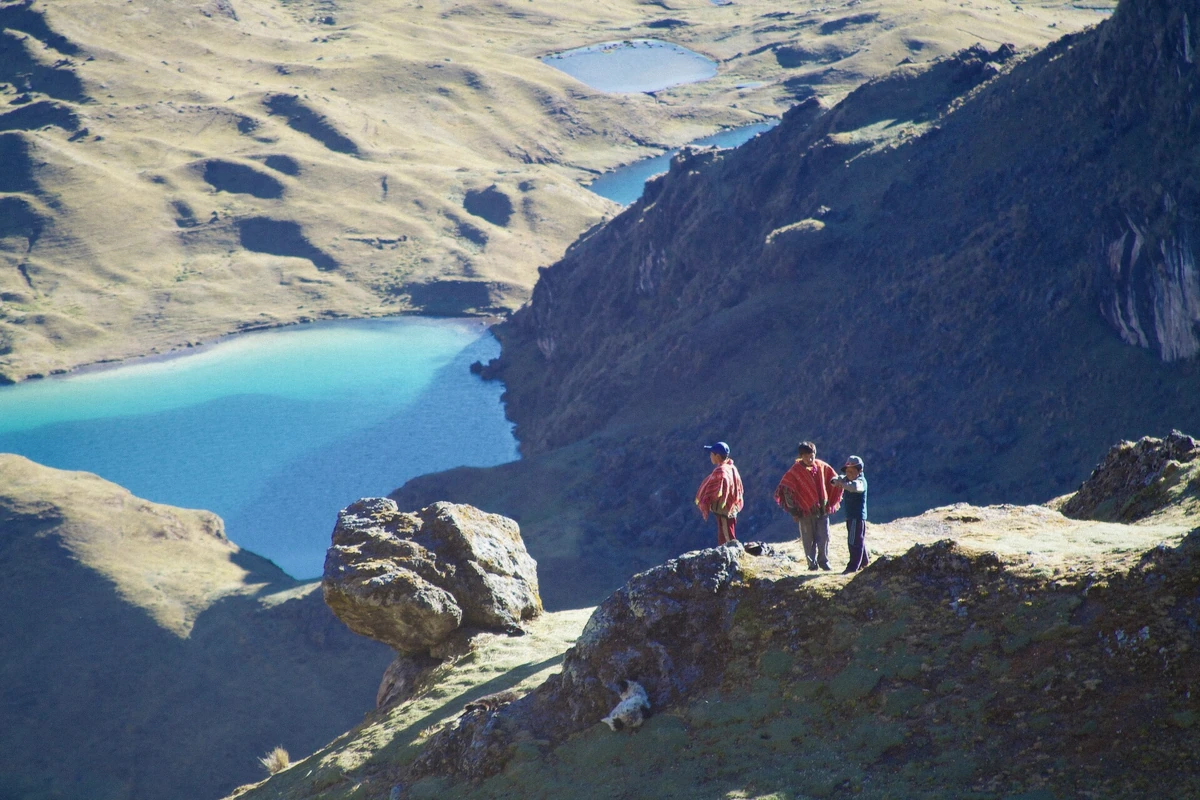
Andean layers in daily use - the local answer to four seasons before lunch is the one this page copies. Photo: McKay Savage from London, UK / CC BY 2.0, via Wikimedia Commons.jpg)
Kit Questions, Answered
Three questions recur in every packing conversation about the citadel - here they are with the reasoning attached, so the checklist above reads as decisions rather than dogma.
Are trail shoes really necessary for the classic circuits?
For Circuit 2 in the dry season, grippy trainers genuinely suffice - the stone is worn, not technical. The case for trail shoes is the wet season's slick steps, the mountain hikes' steepness, and the ankles of travellers who have walked ten days of Peru already. The honest rule: buy the shoes for the feet you will have on your twelfth day of travel, not your first.
How much water is enough, and where are the toilets?
One to one-and-a-half litres covers a morning circuit in any season; more becomes a carrying problem, since there is nowhere to refill inside the sanctuary and toilets sit at the entrance only - one last stop before the turnstile, which is why guides schedule it. Overhydration has its own cost on stepped routes; drink by the clock, not by thirst.
Do I need special clothing to enter a religious or protected site?
Machu Picchu is an archaeological sanctuary, not a working temple: there is no dress code beyond the banned-items rules. The practical minimum is what the mountain itself demands - layers, real shoes, sun protection - and modest travellers add nothing beyond their usual comfort. The gate turns away contraband, not outfits; every private listing's briefing repeats exactly this.
Bags, Security and the Walk Down
Three final practicals close the kit conversation - what the bag check actually asks of you, how to carry valuables, and the one piece of kit travellers forget until the walk down.
The last practicals
The bag check is quick and functional: small daypack, its contents visible at a glance, nothing from the banned list - and no lock, because the check may open the bag. Valuables travel better worn on the body than in the pack; the citadel is safe, but the queue at the bus and the market streets are ordinary crowded places, so the same street rules as any city apply. And the forgotten item is the one for the descent: after two to three hours of climbing and descending stone in fluctuating weather, a dry layer for the bus ride down - or for the train back to Ollantaytambo - is the difference between ending the day humming and ending it shivering.
Travellers on the all-day listings feel this most: the day's last three hours are travel, not ruins, and the bag they packed at dawn decides how those hours feel. The kit's last secret is that it barely matters once the basics are right: past the gate, with dry feet and a working sun hat, the citadel does all the work and the daypack carries itself. Pack the night before, weigh the bag once, and stop optimising - the travellers who arrive over-prepared in every category except the passport are a fixture of every guide's war stories, and this page exists so you will not be one of them.